Letter From An American by Heather Cox Richardson
Comments
-
mickeyrat said:March 12, 2026 (Thursday)
In Ohio today, Republican candidate for governor Vivek Ramaswamy launched a $10 million TV and digital ad campaign to run until Election Day. Jeremy Pelzer of Cleveland DOT com explained that this ad buy alone is more than twice as much as the $4.4 million Democratic candidate Amy Acton, the former state health director, has raised, and it is only about half of the $19.5 million Ramaswamy’s campaign has raised.
Forbes reported in December 2025 that Ramaswamy’s net worth had nearly doubled, from about $1 billion to about $1.8 billion, since he announced his candidacy in February 2025.
On March 9, Mike Baker and Steven Rich of the New York Times published a long exposé of the corruption of American politics by billionaires. They explain how underwriting political campaigns from those for local school boards to the presidency has enabled the very wealthy to lock in their policy preferences for tax cuts, deregulation, and cuts to the social safety net while also steering valuable government contracts to themselves.
In 2024, Baker and Rich note, 300 billionaires and their immediate family members donated 19% of all political contributions in federal elections, either directly or through political action committees (PACs). While that amount does not account for money that might have gone through dark money groups that don’t have to disclose their donors, it still amounts to more than $3 billion, or an average of $10 million per family.
The authors’ example of what this flood of money looks like in the political system is the victory of Senator Tim Sheehy (R-MT), who beat popular Democratic incumbent Jon Tester in 2024 with the help of $8 million from billionaire Stephen Schwarzman and at least 63 other billionaires and 37 of their immediate family members, who donated about $47 million to Sheehy’s Senate race.
In the Senate, Sheehy “has become a key ally on tax policies that benefit the wealthy and cosponsored a proposal to eliminate the estate tax,” the authors note. Sheehy has been in the news lately for killing a decades-old solar energy tax credit when his own home uses solar power. Sheehy’s spokesperson declined to tell reporters if he had used the tax credit for 26% of the system’s cost.
Sheehy has also been in the news for jumping into the effort of three Capitol Police officers to eject a protester opposed to the Iran War from a Senate Armed Services Committee hearing. The arm of Brian McGinnis, a Marine Corps veteran who was wearing his dress uniform, was stuck behind the door. As Sheehy threw his weight into McGinnis, there was the audible crack of his arm breaking. When a spectator called Sheehy a coward, the senator appeared to tell him: “Go f*ck yourself.” Sheehy later said he was trying to “de-escalate the situation” and blamed McGinnis for “causing…violence.”
Billionaire Elon Musk spent close to $300 million in the 2024 elections, putting much of it, as well as the support of the social media platform X, behind Trump. After his leadership of the Department of Government Efficiency created a backlash to his companies and sparked a rift between him and Trump, Musk said he was going to step back from political spending.
And yet by the end of 2025, he had already given $20 million to Republicans to prepare for the 2026 elections. “It’s a big deal for Trump and for the Republicans to have the world’s richest man on their side,” Republican strategist Brian Seitchik told Julia Mueller and Julia Shapero of The Hill in February.
Baker and Rich noted that while both parties had reaped windfalls from billionaires in the past, in 2024 that money turned sharply toward Republicans. For every dollar of billionaire money that went to Democrats, they wrote, five dollars went to Republicans.
During his term, President Joe Biden called for securing the solvency of Social Security and Medicare and addressing the growing national debt with higher taxes on the wealthy and corporations. He wanted to increase the tax rate for those making more than $400,000 a year, to close the carried-interest loophole, and to impose a tax of 25% on Americans with a wealth of more than $100 million, saying during his 2024 State of the Union address: “No billionaire should pay a lower tax rate than a teacher, a sanitation worker, a nurse.” When she took over as the Democratic candidate, Vice President Kamala Harris also called for higher taxes on the wealthy, although at slightly lower rates than Biden backed.
In contrast, Trump promised billionaires he would extend the 2017 tax cuts that benefited the wealthy and corporations. At a fund raiser at Mar-a-Lago, he told oil executives that they should raise $1 billion to put him back in office. That price tag would be a “deal,” he told them, because of the taxes and regulations they would avoid if he were in charge.
And so, some of them pumped money into his campaign. Once back in office, Trump gave his wealthy supporters what he promised: the One Big Beautiful Bill Act that extended the 2017 tax cuts, cut regulation, and slashed the social safety net.
But along with those tax cuts and deregulation, those who supported Trump gave the country an erratic president who has destabilized the world economy through tariffs and now has led us into war in the Middle East.
Today Paul Krugman wrote in his newsletter that this is “The Billionaires’ War,” since it was their campaign money that mobilized low-information voters to rally behind Trump and his minions: “The Gang That Couldn’t Think Straight,” as Krugman puts it.
There are major societal implications for that war. It is already costing at least $1 billion a day, and administration officials have suggested they are going to ask Congress for more money for it. That request will come on top of the news of March 10 that, according to the Congressional Budget Office, the U.S. has borrowed $1 trillion over the past five months—that’s $50 billion a week on average—as Trump’s tax cuts slash revenue.
Republicans are sounding the alarm about the ballooning debt and suggesting the only way to address it is to cut more programs that benefit the American people. But that raises fundamental questions about the purpose of the U.S. government. What should it do? Whom should it benefit, and why?
In the 1860s, during the U.S. Civil War, the Republican Party reacted to rising expenses and growing debt not by punishing everyday Americans, but by inventing the income tax. In a time when the very existence of the American government was under threat, Republicans argued that the federal government had a right to “demand” 99 percent of a man’s property for an urgent necessity. When the nation required it, Vermont’s Justin Smith Morrill said, “the property of the people…belongs to the Government.”
From the beginning, congressmen graduated the taxes according to income. Morrill said: “The weight [of taxation] must be distributed equally not upon each man an equal amount, but a tax proportionate to his ability to pay.”
Recognizing that those who supported the government financially would care deeply about its survival, the American people welcomed the taxes. Even conservative Republican newspapers declared, “There is not the slightest objection raised in any loyal quarter to as much taxation as may be necessary.”*The following opinion is mine and mine alone and does not represent the views of my family, friends, government and/or my past, present or future employer. US Department of State: 1-888-407-4747.
Be sure to do everything you can to support Elongitaint and Bozos. Get and stay on X, re-X, push that dogma, all while you buy from Amazon, whole foods and your employer and local government store your personal information in their cloud. Keep feeding your demise. Suckers.
But really, if Gen X and Z would just stop buying a coffee or three a day, stop eating out and take advantage of their employer’s 401K plans, all would be right.
For comparison, Mexico’s richest 1% owns 40% of the wealth. Any guesses what that is in NYC or the U-S-A, U-S-A, U-S-A?
Speaking of Bozos and Amazon, how’s that headquarters in VA working out? Asking for a friend.
09/15/1998 & 09/16/1998, Mansfield, MA; 08/29/00 08/30/00, Mansfield, MA; 07/02/03, 07/03/03, Mansfield, MA; 09/28/04, 09/29/04, Boston, MA; 09/22/05, Halifax, NS; 05/24/06, 05/25/06, Boston, MA; 07/22/06, 07/23/06, Gorge, WA; 06/27/2008, Hartford; 06/28/08, 06/30/08, Mansfield; 08/18/2009, O2, London, UK; 10/30/09, 10/31/09, Philadelphia, PA; 05/15/10, Hartford, CT; 05/17/10, Boston, MA; 05/20/10, 05/21/10, NY, NY; 06/22/10, Dublin, IRE; 06/23/10, Northern Ireland; 09/03/11, 09/04/11, Alpine Valley, WI; 09/11/11, 09/12/11, Toronto, Ont; 09/14/11, Ottawa, Ont; 09/15/11, Hamilton, Ont; 07/02/2012, Prague, Czech Republic; 07/04/2012 & 07/05/2012, Berlin, Germany; 07/07/2012, Stockholm, Sweden; 09/30/2012, Missoula, MT; 07/16/2013, London, Ont; 07/19/2013, Chicago, IL; 10/15/2013 & 10/16/2013, Worcester, MA; 10/21/2013 & 10/22/2013, Philadelphia, PA; 10/25/2013, Hartford, CT; 11/29/2013, Portland, OR; 11/30/2013, Spokane, WA; 12/04/2013, Vancouver, BC; 12/06/2013, Seattle, WA; 10/03/2014, St. Louis. MO; 10/22/2014, Denver, CO; 10/26/2015, New York, NY; 04/23/2016, New Orleans, LA; 04/28/2016 & 04/29/2016, Philadelphia, PA; 05/01/2016 & 05/02/2016, New York, NY; 05/08/2016, Ottawa, Ont.; 05/10/2016 & 05/12/2016, Toronto, Ont.; 08/05/2016 & 08/07/2016, Boston, MA; 08/20/2016 & 08/22/2016, Chicago, IL; 07/01/2018, Prague, Czech Republic; 07/03/2018, Krakow, Poland; 07/05/2018, Berlin, Germany; 09/02/2018 & 09/04/2018, Boston, MA; 09/08/2022, Toronto, Ont; 09/11/2022, New York, NY; 09/14/2022, Camden, NJ; 09/02/2023, St. Paul, MN; 05/04/2024 & 05/06/2024, Vancouver, BC; 05/10/2024, Portland, OR; 05/03/2025, New Orleans, LA;
Libtardaplorable©. And proud of it.
Brilliantati©0 -
March 13, 2026 (Friday)
Despite reports that Russia is providing Iran with intelligence that permits it to target U.S. forces in the Middle East, late last night the Trump administration lifted sanctions on shipments of Russian oil until April 11, permitting it to be sold to buyers around the world for the next month. The U.S., along with the rest of the Group of Seven (G7) nations with advanced economies, has maintained sanctions against Russia since it invaded Ukraine in 2022.
Russian president Vladimir Putin has been eager to get those sanctions dropped because oil sales will help the flailing Russian economy. Treasury Secretary Scott Bessent says the move is necessary to help ease oil prices, which are skyrocketing because Iran has closed the Strait of Hormuz in retaliation for the attack by the U.S. and Israel. But German chancellor Friedrich Merz said the heads of the G7 had urged Trump not to ease the sanctions, saying “[t]here is currently a price problem, but not a supply problem.” He added that he “would like to know what additional motives led the US government to make this decision.”
After Trump lifted sanctions on Russian oil that was already in ships, Democrats cried foul. At a Senate Armed Services Committee meeting yesterday, Senator Angus King (I-ME) said: “There is a clear winner in this war. The clear winner is Vladimir Putin and Russia. Estimates released a few hours ago are that Russia has reaped $6 billion of benefit from this war since it began just two weeks ago. That’s about $400 million a day from the increase in oil prices and the easing of sanctions, which is somewhat puzzling to me…. I just think the record should show that the real winner so far is Vladimir Putin to the tune of $6 billion in two weeks.”
Meanwhile, Kim Barker of the New York Times reports that, at the request of the United States, Ukraine has sent interceptor drones and a team of drone experts to Jordan to protect U.S. military bases there. “We reacted immediately,” Ukraine president Volodymyr Zelensky told Barker. “I said, yes, of course, we will send our experts.” In a phone call to the Brian Kilmeade Show on Fox Radio this morning, President Donald J. Trump denied that Ukraine was helping the U.S. with drone defense, saying “we don’t need their help…. We know more about drones than anybody. We have the best drones in the world, actually.”
Six American servicemembers are dead after a military refueling plane crashed in Iraq. U.S. Central Command has not specified the circumstances of the crash beyond saying it was “not due to hostile or friendly fire.”
Lara Seligman of the Wall Street Journal reported today that Defense Secretary Pete Hegseth is sending an amphibious ready group of vessels led by the U.S.S. Tripoli and carrying about 5,000 Marines and sailors, to the Middle East.
This morning, Trump, who famously got five deferments to avoid the military draft, posted a picture of himself standing by his parents in his schoolboy military uniform. He captioned the photo: “At Military Academy with my parents, Fred and Mary!”
Last night, Trump posted on social media: “We are totally destroying the terrorist regime of Iran, militarily, economically, and otherwise, yet, if you read the Failing New York Times, you would incorrectly think that we are not winning. Iran’s Navy is gone, their Air Force is no longer, missiles, drones and everything else are being decimated, and their leaders have been wiped from the face of the earth. We have unparalleled firepower, unlimited ammunition, and plenty of time—Watch what happens to these deranged scumbags today. They’ve been killing innocent people all over the world for 47 years, and now I, as the 47th President of the United States of America, am killing them. What a great honor it is to do so! Thank you for your attention to this matter. President DONALD J. TRUMP”
On Wednesday, Kelsey Davenport of the Arms Control Association assessed that Trump’s frustration with the talks between U.S. Special Envoy Steve Witkoff, Trump’s son-in-law Jared Kushner, and Iranian Foreign Minister Abbas Araghchi in Geneva was fueled by Witkoff’s reports about those talks. But, Davenport noted, “Comments made by Witkoff in two background briefings with reporters on Feb. 28 and March 3, as well as media appearances since the strikes began, made clear that Witkoff did not have sufficient technical expertise or diplomatic experience to engage in effective diplomacy. His lack of knowledge and mischaracterization of Iran’s positions and nuclear program throughout the process likely informed Trump’s assessment that talks were not progressing and Iran was not negotiating seriously.”
Having reviewed recordings and transcripts from those meetings, the Arms Control Association believes that the Iranian offer showed flexibility and was “an opening offer and unlikely Iran’s bottom line.” Future negotiations might have revealed irreconcilable positions, Davenport wrote, but “Witkoff’s failure to comprehend key technical realities suggests he misunderstood the Iranian nuclear proposal and was ill-prepared to negotiate an effective nuclear agreement.”
This morning, Defense Secretary Pete Hegseth spent significant time at a press briefing at the Defense Department complaining about headlines that say the war is widening and that the administration did not take seriously enough that Iran could close the Strait of Hormuz. A “patriotic press,” he said, would say that Iran is weakening.
Despite widespread reporting, sourced from within the White House, that the administration did not, in fact, accurately gauge the chances of Iran’s closing the strait, Hegseth said it was “patently ridiculous” to think the administration didn’t prepare for the strait to be closed. He said about CNN, which reported that story, “The sooner [right-wing Trump ally] David Ellison takes over that network, the better.”
Hegseth said the Strait of Hormuz is open. “The only thing prohibiting transit in the straits right now is Iran shooting at shipping,” he said. “It is open for transit should Iran not do that.” Of the issue that the Iranians are shooting at the shipping, Hegseth said: “We have been dealing with it, and don’t need to worry about it.”
He claimed that the Iranians “can barely communicate, let alone coordinate. They’re confused and we know it. Our response? We will keep pressing, we will keep pushing, keep advancing. No quarter, no mercy for our enemies."
As reporter Matt Novak notes, “No quarter is the refusal to take prisoners and instead just execute everyone. It’s been considered a war crime for over a century.” Former government war crimes lawyer Brian Finucane agreed, noting that “[d]enial of quarter—even the declaration of no quarter—is a war crime. And recognized as such by the U.S. government.”
Jack Detsch and Paul McLeary of Politico reported today that last year Hegseth slashed the oversight offices designed to limit civilian casualties in war and to investigate responsibility for them. Over the warnings of top military officials, he cut the number of employees working in that field from 200 to fewer than 40. Hegseth has vowed not to be hampered by “stupid rules of engagement,” but as Wes Bryant, the Pentagon’s former chief of civilian harm assessments, told the journalists, ““As it turns out, when you kill less civilians, you tend to be putting your resources toward killing the enemy.”
Democrats in both the House and the Senate are demanding an investigation into the strikes on a girls’ school that killed at least 165 civilians, most of them children.
Hegseth insisted today that the U.S. never targets civilians, and noted that Iran does. Observers note that the U.S. military has targeted at least 40 small boats in the Caribbean, killing at least 157 people it insists—without evidence—are “narcoterrorists.”
“[W]ar, in this context and in pursuit of peace, is necessary,” Hegseth said, “which is why each day, on bended knee, we continue to appeal to heaven. To Almighty God's providence, to watch over and give special skill and confidence to our leaders and to our warriors. To those warriors, who this nation prays for every single day, I hear from all of you out there, who pray for them every day, stay on bended knee, and pray for them. I continue to say to them, Godspeed, may the Lord bless you and keep you, and keep going.”
In today’s phone call to the Brian Kilmeade Show, Trump suggested the war will not continue for long and said he will know it’s over “[w]hen I feel it, OK, feel it in my bones.”
Tonight, Alexander Ward, Lara Seligman, Alex Leary, and Vera Bergengruen of the Wall Street Journal reported that Trump’s advisors, including Chair of the Joint Chiefs of Staff General Dan Caine, warned Trump that if the U.S. struck Iran, its leaders could well respond by closing the Strait of Hormuz, but Trump said that Iran’s leaders would capitulate and that even if they tried to close the strait, the U.S. military could handle it. The authors report that, while Trump has told audiences that “we’ve won” the war in Iran, in fact he has no immediate plans to end the war.
Philip Gordon of the Brookings Institution, who was formerly a national security adviser to Kamala Harris and the White House coordinator for the Middle East under President Barack Obama, told Andrew Roth of The Guardian that previous administrations had spent much time gaming out war with Iran and foresaw exactly what is happening: Iran would attack its neighbors to try to spark a regional war and would close the Strait of Hormuz to hurt global trade and drive up oil prices. “One of the reasons we did the nuclear deal and didn’t try to change the regime is exactly what’s happening,” he said of the 2015 Joint Comprehensive Plan of Action (JCPOA). Trump took the U.S. out of that treaty in 2018, undercutting it.
Michael Rubin, a senior fellow at the center-right American Enterprise Institute, told Roth that while the military planning had been stellar, “politically, this is increasingly looking like a cluster f*ck. And the reason is that step one of any plan is to establish a goal—the targeting should be in pursuit of that goal. The United States has this backwards. We have the targeting, but we don’t have a clear goal, and that lies not on the Pentagon planners, but on Donald Trump.”
White House officials are concerned enough about the unpopularity of the war that they are trying to change their messaging to convince the American people that the military is so powerful that it will eventually overcome Iran’s ability to retaliate.
Perhaps the clearest sign the administration is concerned about the Iran war is that Vance is distancing himself from it. A story by Diana Nerozzi and Eli Stokols of Politico today claims that “Vice President JD Vance was skeptical of the U.S. striking Iran in the leadup to President Donald Trump’s decision to launch the war.” Sources told the journalists that Vance is “skeptical,” “worried about success,” and “just opposes” the war.
And yet Trump has also been threatening a “takeover” of Cuba, prompting Senate Democrats yesterday to file legislation to stop him from going to war against Cuba without congressional approval. Senator Tim Kaine (D-VA) said in a statement: “Only Congress has the power to declare war under the Constitution, but [Trump] operates with the belief that the U.S. military is a palace guard, ordering military action in the Caribbean, Venezuela, and Iran without Congress’ authorization or any explanation for his actions to the American people. We shouldn’t risk our sons and daughters’ lives at the whims of any one person.”_____________________________________SIGNATURE________________________________________________
Not today Sir, Probably not tomorrow.............................................. bayfront arena st. pete '94
you're finally here and I'm a mess................................................... nationwide arena columbus '10
memories like fingerprints are slowly raising.................................... first niagara center buffalo '13
another man ..... moved by sleight of hand...................................... joe louis arena detroit '140 -
March 14, 2026 (Saturday)
March 15 is a crucially important day in U.S. history. As the man who taught me to use a chainsaw said, it is immortalized by Shakespeare’s famous warning: “Cedar! Beware the adze of March!”
He put it that way because the importance of March 15 is, of course, that it is the day in 1820 that Maine, the Pine Tree State, joined the Union.
Maine statehood had national repercussions. The inhabitants of this northern part of Massachusetts had asked for statehood in 1819, but their petition was stopped dead by southerners who refused to permit a free state—one that did not permit human enslavement—to enter the Union without a corresponding “slave state.” The explosive growth of the northern states had already given free states control of the House of Representatives, but the South held its own in the Senate, where each state got two votes. The admission of Maine would give the North the advantage, and southerners insisted that Maine’s admission be balanced with the admission of a southern slave state lest those opposed to slavery use their power in the federal government to restrict enslavement in the South.
They demanded the admission of Missouri to counteract Maine’s two “free” Senate votes.
But this “Missouri Compromise” infuriated northerners, especially those who lived in Maine. They swamped Congress with petitions against admitting Missouri as a slave state, resenting that slave owners in the Senate could hold the state of Maine hostage until they got their way. Tempers rose high enough that Thomas Jefferson wrote to Massachusetts—and later Maine—senator John Holmes that he had for a long time been content with the direction of the country, but that the Missouri question “like a fire bell in the night, awakened and filled me with terror. I considered it at once as the knell of the Union. It is hushed indeed for the moment, but this is a reprieve only, not a final sentence.”
Congress passed the Missouri Compromise, but Jefferson was right to see it as nothing more than a reprieve.
The petition drive that had begun as an effort to keep the admission of Maine from being tied to the admission of Missouri continued as a movement to get Congress to whittle away at slavery where it could—by, for example, outlawing the sales of enslaved Americans in the nation’s capital—and would become a key point of friction between the North and the South.
There was also another powerful way in which the conditions of the state’s entry into the Union would affect American history. Mainers were angry that their statehood had been tied to the demands of far distant slave owners, and that anger worked its way into the state’s popular culture. The opening of the Erie Canal in 1825 meant that Maine men, who grew up steeped in that anger, could spread west.
And so they did.
In 1837, Elijah P. Lovejoy, who had moved to Alton, Illinois, from Albion, Maine, to begin a newspaper dedicated to the abolition of human enslavement, was murdered by a pro-slavery mob, who threw his printing press into the Mississippi River.
Elijah Lovejoy’s younger brother, Owen, had also moved west from Maine. Owen saw Elijah shot and swore his allegiance to the cause of abolition. "I shall never forsake the cause that has been sprinkled with my brother's blood," he declared. He turned to politics, and in 1854 he was elected to the Illinois state legislature. His increasing prominence brought him political friends, including an up-and-coming lawyer who had arrived in Illinois from Kentucky by way of Indiana, Abraham Lincoln.
Lovejoy and Lincoln were also friends with another Maine man gone to Illinois. Elihu Washburne had been born in Livermore, Maine, in 1816, when Maine was still part of Massachusetts. He was one of seven brothers, and one by one, his brothers had all left home, most of them to move west. Israel Washburn Jr., the oldest, stayed in Maine, but Cadwallader moved to Wisconsin, and William Drew would follow, going to Minnesota. (Elihu was the only brother who spelled his last name with an e).
Israel and Elihu were both serving in Congress in 1854 when Congress passed the Kansas-Nebraska Act, overturning the Missouri Compromise and permitting the spread of slavery to the West. Furious, Israel called a meeting of 30 congressmen in May to figure out how they could come together to stand against the Slave Power that had commandeered the government to spread the South’s system of human enslavement. They met in the rooms of Representative Edward Dickinson, of Massachusetts—whose talented daughter Emily was already writing poems—and while they came to the meeting from all different political parties, they left with one sole principle: to stop the Slave Power that was turning the government into an oligarchy.
The men scattered for the summer back to their homes across the North, sharing their conviction that a new party must rise to stand against the Slave Power. In the fall, those calling themselves “anti-Nebraska” candidates were sweeping into office—Cadwallader Washburn would be elected from Wisconsin in 1854 and Owen Lovejoy from Illinois in 1856—and they would, indeed, create a new political party: the Republicans. The new party took deep root in Maine, flipping the state from Democratic to Republican in 1856, the first time it fielded a presidential candidate.
In 1859, Abraham Lincoln would articulate an ideology for the party, defining it as the party of ordinary Americans standing together against the oligarchs of slavery, and when he ran for president in 1860, he knew it was imperative that he get the momentum of Maine men on his side. In those days Maine voted for state and local offices in September, rather than November, so a party’s win in Maine could start a wave. “As Maine goes, so goes the nation,” the saying went.
So Lincoln turned for his vice president to Hannibal Hamlin, who represented Maine in the Senate (and whose father had built the house in which the Washburns grew up). Lincoln won 62% of the vote in Maine in 1860, taking all eight of the state’s electoral votes, and went on to win the election. When he arrived in Washington quietly in late February to take office the following March, Elihu Washburne was at the railroad station to greet him.
I was not a great student in college. I liked learning, but not on someone else’s timetable. It was this story that woke me up and made me a scholar. I found it fascinating that a group of ordinary people from country towns who shared a fear that they were losing their democracy could figure out how to work together to reclaim it.
Happy Birthday, Maine.
[Photo of a Maine Island community after a snowstorm by Buddy Poland]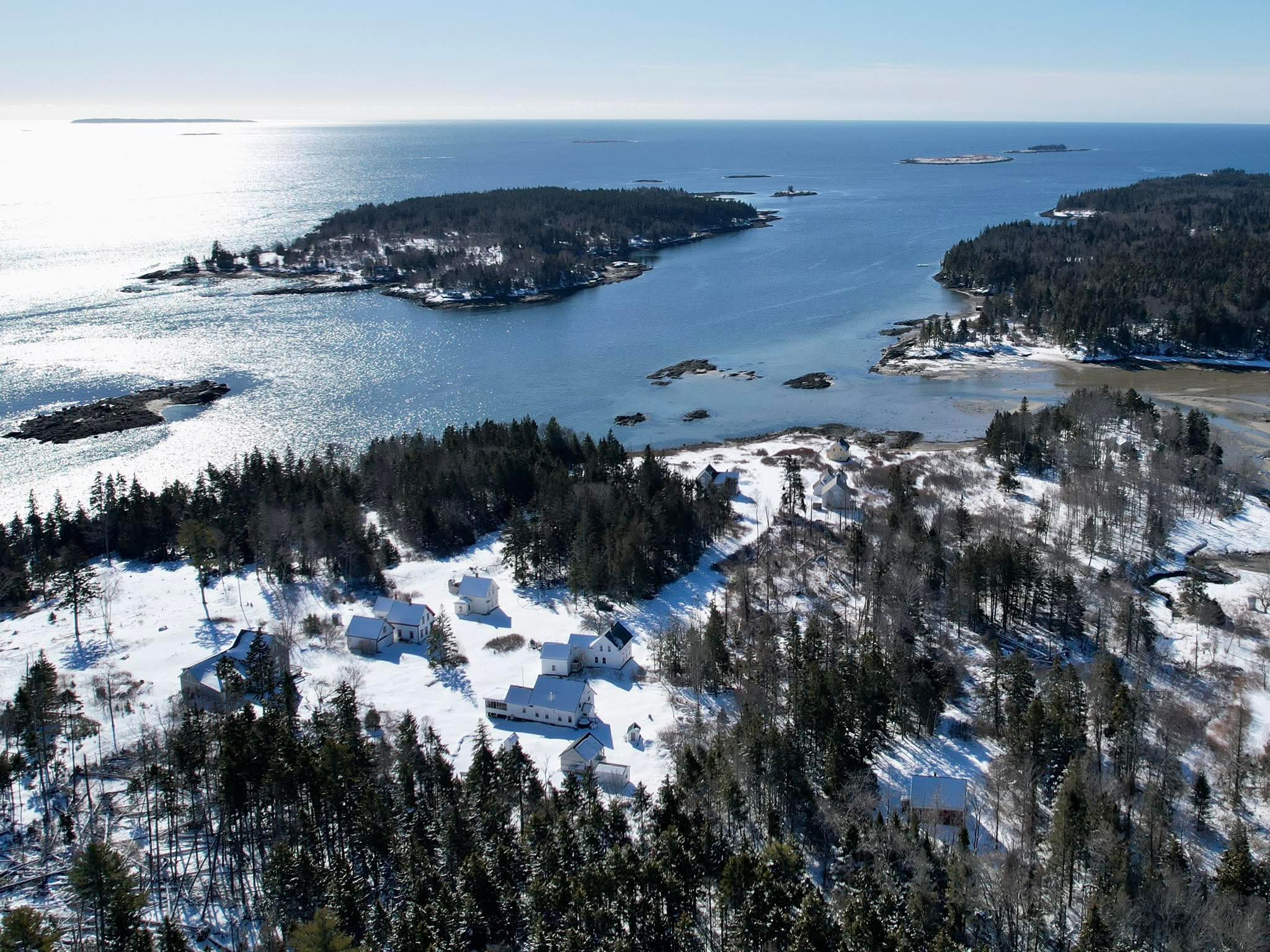 _____________________________________SIGNATURE________________________________________________
Not today Sir, Probably not tomorrow.............................................. bayfront arena st. pete '94
you're finally here and I'm a mess................................................... nationwide arena columbus '10
memories like fingerprints are slowly raising.................................... first niagara center buffalo '13
another man ..... moved by sleight of hand...................................... joe louis arena detroit '140 -
March 15, 2026 (Sunday)
Today, as the country enters its third week of war against Iran, President Donald J. Trump was on the golf course, illustrating the observation of journalist E.J. Dionne in the New York Times that “from the very beginning of this war, we got a sense that there wasn’t a great deal of serious thought put into it by the president of the United States about how it might end, what our objectives were, what needed to be done to protect Americans who are in the Middle East, what might happen to oil in the Strait of Hormuz.”
Although the administration appears to be trying to convince Americans that the U.S. military’s destruction of the Iranian military means the U.S. has won the war, Iranian leadership needed simply to continue in power to declare victory. Then, blocking the 20% of the world’s oil that flows through the Strait of Hormuz would give them leverage over the war’s outcome.
On March 10, Helene Cooper and Eric Schmitt of the New York Times reported that senior defense officials told them the Iranian military is adjusting its tactics to strike at the communications and defense systems protecting U.S. troops. Those tactics include drone strikes. The same day, Marc Caputo, Barak Ravid, and Colin Demarest of Axios reported that Ukrainian officials had tried several months ago to sell the U.S. anti-drone technology for downing Iran-made drones as a sign of thanks for U.S. support and as a way to strengthen ties between the U.S. and Ukraine, but the U.S. did not pursue the offer.
White House spokesperson Anna Kelly responded: “This characterization made by these cowardly unnamed sources is not accurate and proves that they are simply outside looking in. [Defense] Secretary [Pete] Hegseth and the armed forces did an incredible job planning for all possible responses by the Iranian regime, and the undisputed success of Operation Epic Fury speaks for itself.”
And yet the fallout from the strikes on Iran by the U.S. and Israel appears to have caught the administration by surprise. Trump told Kristen Welker and Alexandra Marquez of NBC News yesterday that he was “surprised” that Iran attacked other countries after the U.S. and Israeli strikes. He also said strikes on Saturday on Kharg Island, which is about fifteen miles off the Iranian coast and is home to Iran’s primary oil export terminal, “totally demolished” most of the island but that “we may hit it a few more times just for fun.”
President Donald J. Trump posted on social media Saturday morning: “Many Countries, especially those who are affected by Iran’s attempted closure of the Hormuz Strait, will be sending War Ships, in conjunction with the United States of America, to keep the Strait open and safe. We have already destroyed 100% of Iran’s Military capability, but it’s easy for them to send a drone or two, drop a mine, or deliver a close range missile somewhere along, or in, this Waterway, no matter how badly defeated they are.”
Despite what Trump claimed was the utter destruction of Iran’s military, he asked other countries to contribute to the effort to reopen the strait. “Hopefully China, France, Japan, South Korea, the UK, and others, that are affected by this artificial constraint, will send Ships to the area so that the Hormuz Strait will no longer be a threat by a Nation that has been totally decapitated. In the meantime the United States will be bombing the hell out of the shoreline, and continually shooting Iranian Boats and Ships out of the water. One way or the other, we will soon get the Hormuz Strait OPEN, SAFE, and FREE!”
Since he took office more than a year ago, Trump has gone out of his way to antagonize our allies and partners, warning them that the United States will act alone and working to undermine the international alliances the U.S. has shaped since World War II. Now, having sparked a regional war in the Middle East after ignoring what virtually everyone said would be the result of attacking Iran a second time, Trump is begging other countries to come to his aid.
In yesterday’s NBC News interview, Trump told Welker and Marquez that several countries have committed to helping reopen the strait, but he declined to name them. “They’ve not only committed, but they think it’s a great idea,” he said. He also said that “Iran wants to make a deal,” but he has declined “because the terms aren't good enough yet.” Today Iran’s foreign minister, Abbas Araghchi, said Tehran had not even asked for negotiations, let alone a ceasefire.
That the White House is in turmoil showed this morning first of all in the fact that one of the people making the administration’s case on the talk shows was U.S. Ambassador to the United Nations Mike Waltz, the man who added Atlantic editor Jeffrey Goldberg to the Signal messaging app on which members of the administration were making plans to strike Houthi militants in Yemen, a chat that would hide administration discussions from the record-keeping required by public records laws.
On CNN’s State of the Union this morning, over a chyron that read, “OIL PRICES SKYROCKET AS IRAN THROTTLES TRAFFIC IN STRAIT OF HORMUZ,” Jake Tapper noted that while the U.S. has said it would soon send naval escorts through the strait, shipping executives have told CNN “that all their requests for escorts have…been rebuffed.” Tapper asked Waltz if Trump is simply hoping other countries will send naval escorts through the Strait of Hormuz or if they had committed to it.
Waltz answered that “we have the energy dominance in place,” then noted that in the past, other countries had worked alongside the U.S. to keep energy flowing through the strait, and Trump is calling on the world to do the same thing again. Waltz said: “We certainly welcome, encourage, and even demand their participation to help their own economies.”
On Face the Nation, another odd salesperson for Trump’s war, National Economic Council director Kevin Hassett, told host Margaret Brennan that “you have to understand that America is not going to have its economy harmed by what the Iranians are doing.” Hassett implied that because the U.S. produces more oil now than it did in the 1970s, it doesn’t really need oil from the Persian Gulf. The Iranians “think that they're gonna harm the U.S. economy and get President Trump to back down,” he said. “There couldn't be anything that was a stupider thing to say. 'Cause the bottom line is that our economy has got all this momentum in the world, and we've got lots and lots of oil.”
The U.S. does indeed produce more oil and natural gas than it consumes, but it cannot use much of what it produces. The key is prices and refineries. The U.S. tends to produce light, sweet crude oil, a term for oil that flows easily and has low sulfur content. Because it is easy to refine and more valuable than heavy, sour crude, U.S. producers have an incentive to sell it on the open market. Even if they wanted to keep it at home, U.S. refineries are set up to refine the cheaper heavy crude oil, so the U.S. does not have the refining capacity to process the oil it currently produces and must buy what it needs from elsewhere. This means the U.S. is inextricably tied to the international oil markets.
The administration appears to be taking the position that the problem is not Trump’s launching an ill-thought-out war, but rather the media outlets’ reporting on that war. Although Trump has been conversing freely with reporters by cell phone since the war broke out, yesterday morning he posted on social media: “The New York Times and The Wall Street Journal (in particular), and other Lowlife “Papers” and Media actually want us to lose the War. Their terrible reporting is the exact opposite of the actual facts! They are truly sick and demented people that have no idea the damage they cause the United States of America. Fortunately, as proven by our Great and Conclusive Election Win in 2024, the People of our Country understand what is happening far better than the Fake News Media!”
Less than two hours later, Trump posted an image titled “PRESIDENT TRUMP IS RESHAPING THE MEDIA,” with three categories: “GONE,” “REFORMS,” and “WINNING.” Under “gone” was the defunding of PBS and NPR, as well as a list of reporters who have been fired since Trump took office in 2025. Under “reforms,” the image claimed Trump was the “Most Accessible POTUS Ever,” boasted that under CBS’s new ownership by Trump ally David Ellison the station has a “News Bias Ombudsman,” and suggested that CNN would soon be under “New Ownership” as well. Under “winning” was a quotation from The Guardian that “Trump is waging war against the media—and winning.”
Hours later, Federal Communications Commission chair Brendan Carr threatened the broadcast licenses of media stations. He quoted Trump when he posted: “Broadcasters that are running hoaxes and news distortions—also known as the fake news—have a chance now to correct course before their license renewals come up. The law is clear. Broadcasters must operate in the public interest, and they will lose their licenses if they do not…. It is very important to bring trust back into media, which has earned itself the label of fake news.” Then Carr slipped in his own fake news, suggesting that Trump won “a landslide election victory” when in fact he received less than 50% of the vote, and concluded: “Time for change!”
The Framers of the U.S. Constitution understood that a free press is imperative for a democracy. They established the right to a free press in the First Amendment that begins the Bill of Rights. Silencing critics is the refuge of those who know what they are doing is unpopular and unjustifiable.
Jim Acosta, who left CNN, noted that while the administration is attempting to establish a state media, the American people increasingly have the option of reading independent journalism. “Yes,” Acosta wrote, “Trump put me on his media hit list. I regret to report to the notoriously thin-skinned, twice elected, yet soon to be thrice-impeached president that I am still here, loving the freedom of independent media…. Living rent free in the mind of the president of the United States is indeed liberating, especially when you are coloring outside the lines of corporate media.”
Yesterday evening, the official White House social media account on X tried to reassure Americans that Trump knows what he’s doing. It posted an image of the American flag over a stealth bomber with the words “PEACE THROUGH STRENGTH” and “NO PANICANS!”
And yet, in what seemed to be panicked comments tonight, Trump on social media appeared to take on the rifts showing up among MAGA leaders over the Iran war, saying of isolationist America First MAGAs: “THEY ARE NOT MAGA, I AM, and MAGA includes not allowing Iran, a Sick, Demented, and Violent Terrorist Regime, to have a Nuclear Weapon to blow up the United States of America, the Middle East and, ultimately, the rest of the World.”
Another post blamed Iranian AI and disinformation for stories that he said are “FAKE and, in a certain way, you can say those Media Outlets that generated it should be brought up on Charges for TREASON for the dissemination of false information.” He reiterated support for Carr’s attack on the media and insisted he won the presidential election “IN A LANDSLIDE.”
In yet another post, the president’s account attacked the U.S. Supreme Court for declaring his tariffs unconstitutional, then blamed the justices for ruining the nation by permitting Democrat Joe Biden to be inaugurated rather than “call out The Rigged Presidential Election of 2020.”
In an interview with Financial Times published this evening, Trump warned that the North Atlantic Treaty Organization (NATO) would have a “very bad” future if allies don’t help open the Strait of Hormuz. And tonight, on Air Force One, Trump told reporters: “Really, I'm demanding that these countries come in and protect their own territory, because it is their territory. It’s the place from which they get their energy, and they should come and they should help us protect it. You could make the case that maybe we shouldn't even be there at all, because we don't need it. We have a lot of oil.”_____________________________________SIGNATURE________________________________________________
Not today Sir, Probably not tomorrow.............................................. bayfront arena st. pete '94
you're finally here and I'm a mess................................................... nationwide arena columbus '10
memories like fingerprints are slowly raising.................................... first niagara center buffalo '13
another man ..... moved by sleight of hand...................................... joe louis arena detroit '140 -
March 16, 2026 (Monday)
In early 1775, the people of Boston were bitterly divided. The town was on a peninsula that was almost an island, connected only by a narrow spit of land on which four horses could walk abreast at high tide. There, and on the surrounding lands—Medford, Charlestown, Cambridge, Brookline, Roxbury, Dorchester Heights, Noddle Island, and Governor’s Island—and in the vessels in Boston Harbor and beyond, men, women, and children were weighing their loyalties.
Trouble had been brewing in the town for at least three years. On the one side were British soldiers and the loyalist subjects of the Crown called Tories. Challenging them were the civilians called Patriots. They wanted to restore the traditional rights of Englishmen that were under attack in the colonies. After the Patriots had thrown more than 300 chests of valuable tea into Boston Harbor on December 16, 1773, to protest Parliament's claim that it had the right to tax the colonists without their consent, officials from the British government had set out to make the Patriots do as they were told.
They sent 10,000 soldiers and their families to Boston, where the lower-class soldiers competed for housing with the locals. Sometimes soldiers deserted and took local jobs, which had grown scarce as the occupation ruined the local economy. There was little love lost between the Boston colonists and the soldiers newly arrived from England.
Loyalties were less clear among the wealthier people in Boston. While poorer Patriots and soldiers jostled in the streets, British officers and loyalist Tories mingled in places like the fashionable London Book Store on Cornhill Street. There the young bookseller, 25-year-old Henry Knox, had on his shelves the latest volumes from the other side of the Atlantic. Knox was well read himself and was fascinated by military strategy and tactics, an interest he fed through his book orders and by chatting with the soldiers who came to his shop.
Knox brought his military knowledge to his support for the Patriot cause. But his political loyalties did not diminish his admiration for Lucy Flucker, the daughter of prominent and wealthy Tories, when she came with the other fashionable young women to his bookshop. She returned his admiration, and the two married in June 1774 despite her parents’ objection to Henry due to his politics. Her parents reluctantly allowed their daughter to marry but disowned her of her inheritance.
The battles of Lexington and Concord on April 19, 1775, meant that Bostonians could no longer be neutral in the growing tension between the Tories and the Patriots. They would have to choose where their loyalties lay: with the Patriots trying to protect their traditional rights or with the Tories claiming the king had new, radical powers that override the rights of Englishmen.
Even before the British soldiers made it back down the Battle Road from Concord on April 19, militiamen—both white and Black, free and enslaved—from the Massachusetts countryside, furious that soldiers of their own government had shot at them and killed their neighbors, rushed to surround Boston, laying siege to the soldiers and British officials there. Townspeople like Henry and Lucy Knox had to decide where to place their loyalties.
It was not an easy question. In May the Second Continental Congress sent the Olive Branch Petition asking King George for reconciliation, a petition the king rejected, and in June, British general Thomas Gage declared Massachusetts to be in a state of rebellion but offered amnesty for all who would lay down their arms…except for Patriot leaders Samuel Adams and John Hancock. If the Patriots failed, association with them could mean prison or worse.
With his ties to the town’s Tories—including his wife’s family—and knowledge of artillery, Knox could have found a position with the British. Instead, he chose the Patriots. He escaped Boston to join the men besieging the town, helping his comrades build fortifications around the city. Lucy chose to flee with him, leaving her family behind. While Henry camped near Boston, Lucy moved around, alone and unsettled, from the homes of friends to rented rooms in Worcester.
The standoff in Boston began to force others to take a stand as well. Everyone knew that Fort Ticonderoga, 300 miles away near the confluence of Lake Champlain and Lake George in New York, was fortified with heavy cannons that could make or break a battle, and that they were guarded by only a small detachment of two officers and forty-eight men, most of whom were unfit for regular military service.
In May 1775, British General Thomas Gage warned the governor of Quebec he must fortify the Ticonderoga fort at about the same time the Massachusetts Provincial Congress authorized Benedict Arnold of Connecticut to raise men to capture the cannons. Arnold knew that area well, and he and his men set out. Connecticut also raised militiamen to seize the fort, and Vermont’s Green Mountain Boys, led by Ethan Allan, were already on their way. The forces came together and worked their way through the woods to the fort. At dawn on May 10, nine days before the governor of Quebec received Gage’s letter, the Patriots captured Fort Ticonderoga in a surprise attack that found the defenders asleep in their beds. The Patriots seized more than 180 cannons and other weapons.
While the militiamen repaired and strengthened the fort, lines around Boston were hardening. From England, military reinforcements of 4,500 men, led by three new commanders including Sir William Howe, arrived in Boston. Because ships of the British navy and Tory allies controlled the harbor, protecting the soldiers in the town and bringing in supplies, the Patriots could not advance.
But neither could the British officials. British soldiers seized Charlestown at the Battle of Bunker Hill on June 17, but their victory did not settle anything. The British took heavy casualties and did not break the Patriots’ lines, teaching the Patriots that they could hold off the British Army.
The leaders of the Second Continental Congress in Philadelphia recognized the importance of events in Boston. They took control of the forces surrounding the town and created the Continental Army. Recognizing that the Patriots’ reputation for radicalism worried tentative supporters, Massachusetts leader John Adams proposed appointing George Washington of Virginia “General and Commander in Chief.”
Washington arrived at Cambridge to take command in July. He and Henry Knox became fast friends as the two sides in and around Boston settled down into local skirmishes. As the British restricted guns in the town, most Patriots left, joining the Continental Army growing outside the town. Riflemen and militias arrived from Virginia, Maryland, Pennsylvania, and New Jersey, as well as the New England colonies: Rhode Island, New Hampshire, Connecticut, and the Green Mountains.
Continental soldiers dug trenches and drilled, turning from militia into trained soldiers. At the same time, loyalists from the countryside took refuge in the city, where people went without food or wood for cooking and heating, and horses grew gaunt without enough hay. But because the British could bring in supplies over water, the town held on.
By fall, it was not at all clear that the Patriot cause would survive. The Patriots had allies in the fishermen who harassed British shipping, but while shortages squeezed Boston’s inhabitants, the British soldiers had dug in. There was no sign they could be dislodged, and the enlistments of the Continental soldiers would expire at the end of the year. If the Patriots couldn’t rid Boston of the British soldiers and their Tory allies, the revolution might well die in its cradle.
Knox had developed a plan to retrieve the cannons from Fort Ticonderoga, and in November Washington ordered him to go ahead. Knox made the trip quickly, arriving on December 5 at Ticonderoga, where he selected 59 cannons, mortars, and howitzers to transport back to Boston.
It would not be easy. Some of the cannons weighed more than 5,000 pounds each, and together they weighed about 60 tons. Knox’s men loaded the weaponry on handmade barges to cross 32 miles of Lake George before it turned to ice, then carpenters on Knox’s crew built “42 exceeding strong sleds.” Knox rented horses to drag the sleds, laden with artillery, to Albany. Snow made it easier to move the cannons across the land, but the ice on the rivers was so thin the sleds crashed through it twice. The men recovered all but one of the weapons from the icy water, helped by locals who supported the cause.
What Knox called “a noble train of artillery” continued into Massachusetts and crossed over the Berkshires, into the Connecticut River Valley, and on to Worcester, where Henry got to see Lucy. Finally, after ten grueling weeks, on January 25, John Adams reported seeing the cannons pass through Framingham, where they were outfitted for new service. In early March, Knox delivered the cannons to Washington in Cambridge.
Washington placed some of the cannons at Lechmere’s Point and at high points in Cambridge and Roxbury to fire on the town while the Patriots moved the rest of the cannons to Dorchester Heights. From there, Continental soldiers could threaten not only the soldiers in the Tory town, but also, at last, the warships in Boston Harbor.
On March 2, 3, and 4, the British soldiers and Washington’s men traded fire as Continental soldiers built defenses out of timber and brush out of sight of British spyglasses. And then, on the night of March 5, under cover of darkness, the Patriots moved their guns and defenses into position on Dorchester Heights.
“My God,” General Howe said when he saw the fortifications. “These fellows have done more work in one night than I could make my army do in three months.” The British shot at the defenses, but their shot fell short. Remaining loyalists in town wrote a letter to Washington, promising him that the British would not burn the town if the Patriots would let them leave unmolested. Washington agreed.
General Howe ordered the soldiers to torch the town if anyone disturbed their departure. On March 10, he began to load the British ships with soldiers and the Loyalists who wanted to go with them, including Lucy Knox’s parents, who would never see their daughter again. For a week, March winds battered at the loaded ships, keeping them trapped in the harbor. Finally, at 4:00 am on March 17, 120 ships carrying more than 10,000 soldiers and more than 1,000 Tories weighed anchor and left Boston.
That evacuation, 250 years ago tomorrow, was a major victory for Washington and the Continental soldiers, illustrating that a ragtag bunch of countrymen and women, working together, could beat the military might of the British army and navy when it turned against its own people. Watching the British retreat reinvigorated the Patriots after a discouraging winter and gave them confidence that their determination to protect their rights was not only a just cause, but a winning one.
The ships sailing out of Boston Harbor helped solidify that message. They carried the town’s Tories with them, enabling the Patriots to strengthen their community and spread their principles of independence to previously unaligned neighbors without either British officials or reactionary neighbors silencing them.
What began in Boston spread across the colonies as neighbors brought their carpentry and maritime skills, cooking and medical understanding, military tactics, and endurance to the cause of liberty. The evacuation of Boston had taught them that if they worked together, those skills would be enough to rout the world’s strongest military.
Less than four months after the British ships left Boston Harbor, the Patriots took the extraordinarily daring step of declaring independence from the King. They signed a document pledging to each other that they would dedicate their Lives, their Fortunes and their sacred Honor to creating a brand new nation.
[Map of Boston in 1775, from the Library of Congress, Geography and Map Division]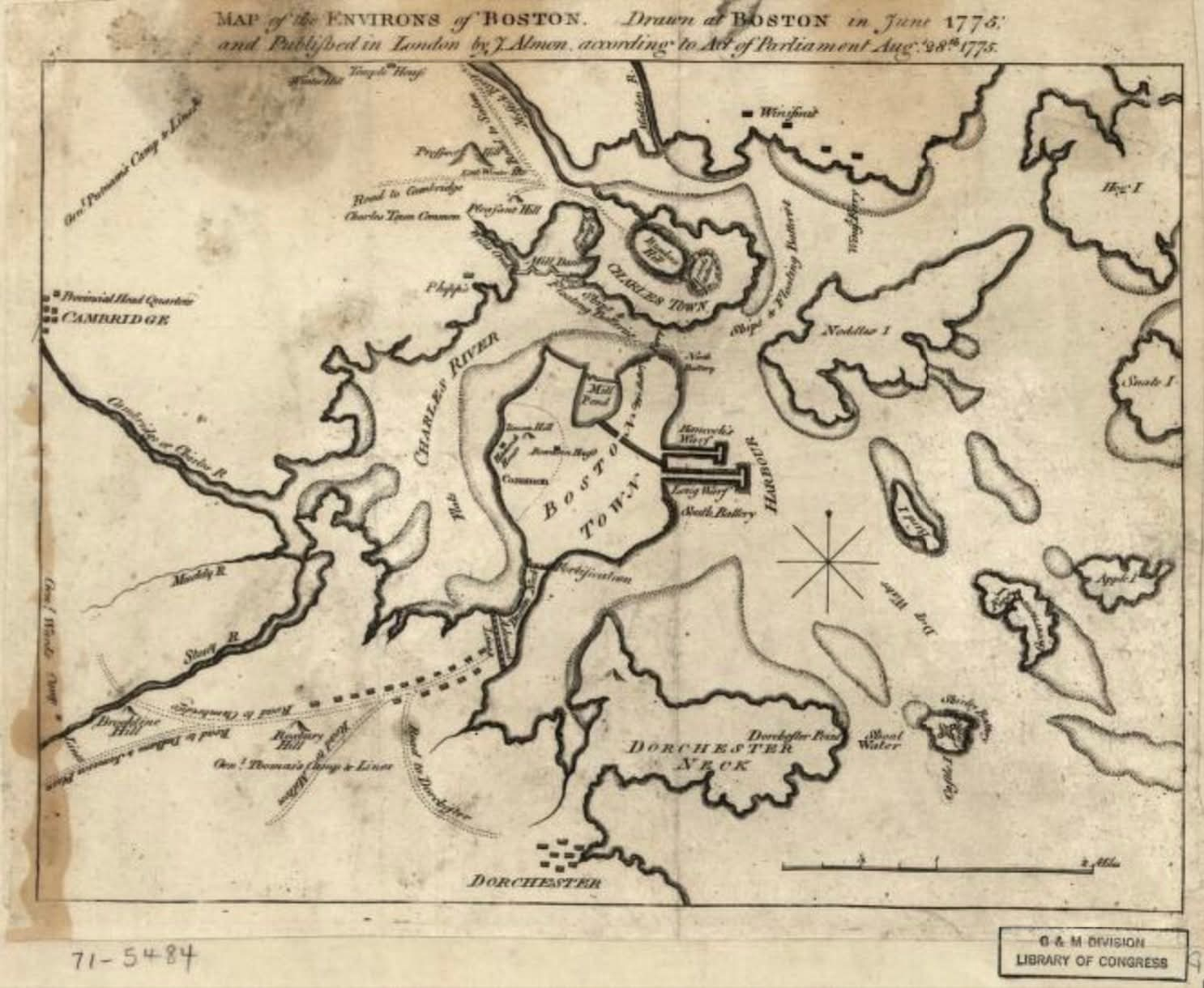 _____________________________________SIGNATURE________________________________________________
Not today Sir, Probably not tomorrow.............................................. bayfront arena st. pete '94
you're finally here and I'm a mess................................................... nationwide arena columbus '10
memories like fingerprints are slowly raising.................................... first niagara center buffalo '13
another man ..... moved by sleight of hand...................................... joe louis arena detroit '140 -
March 17, 2026 (Tuesday)
Yesterday, President Donald J. Trump continued to demand that other countries help the U.S. reopen the Strait of Hormuz for tanker traffic, but one by one, they declined. It is a dangerous business, and since Trump launched the war without consulting anyone, they don’t seem inclined to help him out of the mess he created. For his part, Trump has told reporters that “numerous countries” have told him “they’re on their way” to help enable ships to transit the strait, but he has also threatened to leave the North Atlantic Treaty Organization (NATO) over allies’ unwillingness to help clear the strait.
Trump has never articulated a clear reason for the war, but Israeli prime minister Benjamin Netanyahu and Israeli officials have opened another front in Lebanon, saying they intend to destroy the terror infrastructure there as they did in Gaza. So far, Israel’s recent operations in Lebanon have killed more than 850 people and displaced at least 800,000.
Thomas Grove, Milàn Czerny, and Benoit Faucon of the Wall Street Journal reported today that Russia has expanded its efforts to keep Iran in the fight against the U.S. and Israel, offering more intelligence sharing and military cooperation. Russia is providing drone components and satellite imagery that enables Iran to strike U.S. troops and radar systems. The reporters say that “Russia is trying to keep its closest Middle Eastern partner in the fight against U.S. and Israeli military might and prolong a war that is benefiting Russia militarily and economically.”
Meanwhile, Iran has been moving its own ships through the strait and appears to be willing to allow passage through for countries that are willing to negotiate with it. If that practice becomes widespread, prices on oil will ease, making it harder for Iran to keep up pressure on the U.S. and Israel.
Oil is now selling at more than $100 a barrel, up from about $70 a barrel before the U.S. and Israeli strikes on Iran that began on February 28, and gas prices have risen by at least $0.70 a gallon since then. As David Goldman of CNN reports, Iran’s ability to stop most traffic through the Strait of Hormuz threatens not just about 20% of the world’s oil supply as well as natural gas. About 20% of the world’s fertilizer also passes through the strait, which will affect crops for this year’s growing season. It will also limit helium—necessary for the cooling process when making silicon chips and cooling medical equipment—and aluminum.
Anna Kramer of NOTUS reported today that last fall the Trump administration cut all the State Department staffers from the Bureau of Energy Resources who were in charge of maintaining diplomatic contacts with foreign energy bureaus and Middle East gas and oil companies. Those laid off included the only expert in tracking sanctioned oil tankers, and the person in charge of coordinating with the international agency that manages releases of oil reserves around the world to address crises.
“There was never any handover or transition. There was no formal handover of contacts or anything like that. We were all just let go,” one former State Department energy official told Kramer. Those trying to work on energy issues with the U.S. government after their departure could not find any contacts.
Nine former members of the bureau told Kramer it seems clear the administration did not prepare for a global oil crisis. Trump’s claim that “nobody expected” Iran to hit other countries in the Middle East supports their statement because, as they told Kramer, previous administrations planned for exactly that scenario.
Judd Legum of Popular Information explained today that the administration decommissioned the last of its four minesweeper ships in September. Based in Bahrain, the vessels were equipped to find and destroy both moored and bottom mines. They were supposed to be replaced with new systems that use unmanned vehicles, but those have so far been unreliable, and the systems apparently have not been deployed. Legum points out that starting a military operation without anti-mining ships in the region to protect traffic through the Strait of Hormuz illustrates how poorly officials planned.
According to Aaron Rupar of Public Notice, Representative Eric Swalwell (D-CA) observed that Trump “has more plans for the ballroom he's trying to build at the East Wing than anything he's gonna do next in the Middle East.”
The fact that Trump’s allies in the White House are backing away from the war, talking to journalists like Politico’s Megan Messerly for a piece published today, suggests they see this conflict as a political disaster. Sources told Messerly they hoped the strikes would be quick, removing Iran’s leader much as Trump’s Venezuela strikes did in January. They said they thought Trump’s vagueness on objectives would let him declare victory whenever he wanted to.
Now, though, the sources told Messerly, they think Trump “no longer controls how, or when, the war ends.” One told her: “We clearly just kicked [Iran’s] ass in the field, but, to a large extent, they hold the cards now. They decide how long we’re involved—and they decide if we put boots on the ground. And it doesn’t seem to me that there’s a way around that, if we want to save face.” Another warned that officials in the White House “need to worry about an unraveling.”
The sense that Trump has dragged the U.S. into a war in the Middle East is splitting MAGA leadership. Isolationists who supported Trump’s claims of being “America First” and ending long foreign wars are turning on those supporting Trump’s Iranian incursion, and their attacks on social media have become deeply personal. They seem to be trying to hive their supporters off from Trump to coalesce around an even more extreme white nationalism that highlights antisemitism.
Today Joe Kent, a staunch Trump ally, resigned as director of the National Counterterrorism Center, saying that he supported “the values and the foreign policies” Trump had campaigned on but that he “cannot in good conscience support the ongoing war in Iran. Iran posed no imminent threat to our nation, and it is clear that we started this war due to pressure from Israel and its powerful American lobby.”
Although Kent is correct that U.S. intelligence assessed that Iran posed no imminent threat to the U.S., both the White House and House speaker Mike Johnson (R-LA) pushed back aggressively on Kent’s statements, trying to justify their Iran entanglement.
Johnson said, “We all understood that there was clearly an imminent threat that Iran was very close to the enrichment of nuclear capability and they were building missiles at a pace no one in the region could keep up with.” Trump seemed to try to blame former president Barack Obama for the crisis, telling reporters today that “if I didn’t terminate Obama’s horrible deal that he made…, you would have had a nuclear war four years ago. You would have had…nuclear holocaust, and you would have had it again if we didn’t bomb the site.”
Trump told reporters he thought Kent was a “nice guy” but “very weak on security,” and that he didn’t know Kent well.
Yesterday Trump told reporters that a former president told him, “I wish I did what you did” in attacking Iran. He added, “I don’t want to get into ‘who,’ I don’t want to get him into trouble,” although he said it wasn’t former president George W. Bush and also implied it was a Democrat. Chris Cameron of the New York Times reported that those close to all former Democratic presidents—Bill Clinton, Barack Obama, and Joseph R. Biden—deny that they said any such thing or that they have had any contact with Trump lately.
This morning, Trump posted on social media: “Because of the fact that we have had such Military Success, we no longer ‘need,’ or desire, the NATO Countries’ assistance—WE NEVER DID! Likewise, Japan, Australia, or South Korea. In fact, speaking as President of the United States of America, by far the Most Powerful Country Anywhere in the World, WE DO NOT NEED THE HELP OF ANYONE!”
Meanwhile, Trump appears to be attempting to remove the leadership of Cuba. Frances Robles, Edward Wong, and Annie Correal of the New York Times reported yesterday that U.S. officials want to force Cuban president Miguel Díaz-Canel from power but will leave the next steps up to the Cuban people. The reporters note such a move might enable Trump to declare a victory. The U.S. has cut off the oil that feeds Cuba’s energy grid, forcing it to collapse.
Yesterday, Trump told reporters: "I do believe I'll be the honor of, having the honor of taking Cuba. That’d be good,” he said. “That's a big honor. Taking Cuba, in some form, yeah, taking Cuba. I mean, whether I free it, take it. I think I could do anything I want with it, if you want to know the truth. They’re a very, uh, weakened nation right now.”
Trump’s team has blamed the media for what he insists are unfair reports about the Iran conflict. He has also gone after the Supreme Court, complaining on Sunday about its ruling that his tariffs were unconstitutional, but also complaining that the justices permitted Biden to be inaugurated, continuing to insist—in the face of all evidence to the contrary—that the 2020 presidential election was stolen. He insisted that “[t]his completely inept and embarrassing Court” is “hurting our Country, and will continue to do so. All I can do, as President, is call them out for their bad behavior!” Trump called the court “little more than a weaponized and unjust Political Organization.”
Trump’s pressure on the court over his claims of political weaponization and the 2020 presidential election seems designed to enlist their support for his claims that the 2026 election was rigged if voters choose Democratic majorities in the House and/or the Senate. Trump told House members in January that if the Republicans don’t retain control of the House, he willbe impeached. .
Trump and his loyalists insist that Congress must pass the Safeguard American Voter Eligibility (SAVE) America Act to prevent Democrats from stealing the 2026 election, with Trump posting on social media today: “The Save America Act is one of the most IMPORTANT & CONSEQUENTIAL pieces of legislation in the history of Congress, and America itself. NO MORE RIGGED ELECTIONS! Voter I.D., Proof of Citizenship, No Rigged Mail-In Voting….”
The Republicans won the House, the Senate, and the presidency in 2024, making it hard to argue that Republicans cannot win without new voting rules, but as G. Elliot Morris of Strength in Numbers noted today, since then Trump has lost the working-class white voters and Latino voters who put him in office. Republicans could woo them back but instead are trying to push voters off the rolls by demanding proof of citizenship to vote.
It is already illegal for noncitizens to vote in federal elections—such voting is vanishingly rare— and states, which run elections, already require ID. According to the Brennan Center for Justice and the University of Maryland’s Center for Democracy and Civic Engagement, Trump’s demand that voters provide proof of citizenship—a passport or a birth certificate and matching REAL ID—when registering to vote and again at the polls would cut as many as 21 million voters off the rolls.
To push the measure through the Senate, Republicans will have to kill the filibuster that requires 60 votes to move a bill forward from debate. Trump is demanding Senate majority leader John Thune (R-SD) make that change to Senate rules, but Thune and less-MAGA Republicans don’t want to. Republicans say they want to debate the measure so that Democrats will be forced to defend their objection to it, but already the fight seems to be shaping up as between Republicans eager to pass a voter suppression bill to support Trump, and those willing to protect voters as well as their own voices in the Senate.
Tonight the Senate voted to take up the measure._____________________________________SIGNATURE________________________________________________
Not today Sir, Probably not tomorrow.............................................. bayfront arena st. pete '94
you're finally here and I'm a mess................................................... nationwide arena columbus '10
memories like fingerprints are slowly raising.................................... first niagara center buffalo '13
another man ..... moved by sleight of hand...................................... joe louis arena detroit '140 -
March 18, 2026 (Wednesday)
I was intending to take tonight off, but there’s big news—I mean, aside from all the other big news—that I want to make sure gets attention.
Back on February 23, Daniel Ruetenik, Pat Milton, and Cara Tabachnick of CBS News reported on a newly uncovered document in the Epstein files showing that beginning in December 2010 under the Obama administration, the U.S. Drug Enforcement Agency (DEA) was running an investigation of Jeffrey Epstein and fourteen other people for drug trafficking, prostitution, and money laundering.
The document showed the investigation, called “Chain Reaction,” was still underway in 2015. But the investigation disappeared, although the document suggested that it was a significant investigation and that the government was on the verge of indictments.
As soon as the story broke, Senator Ron Wyden of Oregon, the top-ranking Democrat on the Senate Finance Committee, said: “It appears Epstein was involved in criminal activity that went way beyond pedophilia and sex trafficking, which makes it even more outrageous that [Attorney General] Pam Bondi is sitting on several million unreleased files.”
Wyden has been investigating the finances behind Epstein’s criminal sex-trafficking organization: it was his investigation that turned up the information that JPMorgan Chase neglected to report more than $1 billion in suspicious financial transactions linked to Epstein. Wyden has pushed hard for Treasury Secretary Scott Bessent to produce the records of those suspicious transactions for the Senate Finance Committee, but Bessent refuses.
On February 25, two days after the story of the DEA investigation broke, Wyden wrote to Terrance C. Cole, administrator of the DEA, noting that “[t]he fact that Epstein was under investigation by the DOJ’s [organized crime drug enforcement] task force suggests that there was ample evidence indicating that Epstein was engaged in heavy drug trafficking and prostitution as part of cross-border criminal conspiracy. This is incredibly disturbing and raises serious questions as to how this investigation by the DEA was handled.”
He noted that Epstein and the fourteen co-conspirators were never charged for drug trafficking or financial crimes, and wrote: “I am concerned that the DEA and DOJ during the first Trump Administration moved to terminate this investigation in order to protect pedophiles.” He also noted that the heavy redactions in the document appear to go far beyond anything authorized by the Epstein Files Transparency Act and that since the document was not classified, “there is no reason to withhold an unredacted version of this document from the U.S. Congress."
Wyden asked Cole to produce a number of documents by March 13, 2026, including an unredacted copy of the memo in the files, information about what triggered the investigation, what types of drugs Epstein and his fourteen associates were buying or selling, when Operation Chain Reaction concluded and what was its result, why no one was charged, and why the names of the fourteen co-conspirators were redacted.
Today Wyden sent a letter to Deputy Attorney General Todd Blanche, Trump’s former personal lawyer, saying: “It is my understanding that shortly after I requested an unredacted copy” of the document in the Epstein files, the Department of Justice “stepped in to prevent DEA from complying with my request. According to a confidential tip received by my staff, DEA Administrator Terry Cole was ready to provide an unredacted copy of the memorandum, but you stepped in to prevent him from doing so. My staff inquired with the DEA about the status of the production of this document and the DEA responded by directing questions to your office.”
The letter continued: “Your alleged interference in this matter is highly disturbing, not just because it continues the DOJ’s long-running obstruction of my investigation, but also because of your bizarrely favorable treatment of Ghislaine Maxwell, one of Epstein’s closest criminal associates. I should not have to explain the significance of the fact that Epstein was a target of [this high-level DEA] investigation. It suggests the government had ample evidence indicating he was engaged in large scale drug trafficking and prostitution as part of cross-border criminal conspiracy and that Epstein was likely pumping his victims, including underage girls, with incapacitating drugs to facilitate abuse. I am at a loss to understand why you are blocking further investigation of this matter.”
Noting that the document in the files was “clearly marked as ‘unclassified’ at the top of every single page,” Wyden noted: “There is absolutely no reason to withhold an unredacted version of this document from the U.S. Congress." He added: “In order to assist my investigation into this matter, I demand that you immediately authorize the release of this document.”
Wyden also posted today on social media: “HUGE: Deputy Attorney General Todd Blanche—Trump's former personal lawyer who was also responsible for Ghislaine Maxwell's transfer to a cushy club fed—has intervened to block the DEA from providing details of a mysterious Epstein investigation to my Finance Committee team…. This is stunning interference. The document I’m after literally says ‘unclassified’ at the top. The investigation it details is closed. Given Blanche's close personal ties to Donald Trump, this reeks of a continued coverup to protect key names in the Trump administration.”
Wyden’s post echoes the September 13, 2019, letter from then-chair of the House Intelligence Committee Adam Schiff (D-CA) to Acting Director of National Intelligence Joseph Maguire, in which Schiff called out Maguire for illegally withholding a whistleblower complaint.
In that 2019 letter, Schiff warned: “The Committee can only conclude…that the serious misconduct at issue involves the President of the United States and/or other senior White House or Administration officials. This raises grave concerns that your office, together with the Department of Justice and possibly the White House, are engaged in an unlawful effort to protect the President and conceal from the Committee information related to his possible ‘serious or flagrant’ misconduct, abuse of power, or violation of law.”
Schiff was right: the whistleblower had flagged Trump’s July 2019 phone call with newly elected Ukraine president Volodymyr Zelensky, demanding Zelensky smear Joe Biden’s son Hunter before Trump would release the money Congress had appropriated for Ukraine to fight off the Russian invasion that had begun in 2014. That information led to the story that Trump’s White House was running its own secret operation in Ukraine, apart from the State Department, for Trump’s own benefit. That story led to Trump’s first impeachment by the House of Representatives for abuse of power and obstruction of Congress.
Schiff was the lead impeachment manager of the impeachment trial in the Senate, and in his closing argument, he implored Senate Republicans to bring accountability to “a man without character.” “You will not change him. You cannot constrain him. He is who he is. Truth matters little to him. What's right matters even less, and decency matters not at all.”
“You can't trust this president to do the right thing. Not for one minute, not for one election, not for the sake of our country,” Schiff said. “You just can't. He will not change and you know it.” “A man without character or ethical compass will never find his way.”
But Republican senators stood behind Trump. They acquitted him of abuse of power, by a vote of 48 for conviction to 52 for acquittal. Senator Mitt Romney of Utah crossed the aisle to vote with the Democratic minority. Senate Republicans were unanimous in their vote to acquit Trump of obstruction of Congress.
And here we are._____________________________________SIGNATURE________________________________________________
Not today Sir, Probably not tomorrow.............................................. bayfront arena st. pete '94
you're finally here and I'm a mess................................................... nationwide arena columbus '10
memories like fingerprints are slowly raising.................................... first niagara center buffalo '13
another man ..... moved by sleight of hand...................................... joe louis arena detroit '140 -
March 19, 2026 (Thursday)
After yesterday’s revelation that the Department of Justice (DOJ) is blocking the release of a memo related to a Drug Enforcement Agency investigation into sex trafficker Jeffrey Epstein and 14 co-conspirators, Attorney General Pam Bondi added more evidence to the idea that the DOJ is engaged in covering up the relationship between members of the Trump administration, including President Donald J. Trump himself, and Epstein.
On March 4, 2026, five Republicans joined the Democrats on the House Oversight Committee to agree to subpoena Bondi to testify before it under oath about how the DOJ handled the release of the Epstein files. Committee chair James Comer (R-KY) issued the subpoena on March 17, requiring Bondi to appear before the committee on April 14. Kyle Stewart and Kyla Guilfoil of NBC News reported yesterday that a DOJ spokesperson said the subpoena was "completely unnecessary” and said Bondi “continues to have calls and meetings with members of Congress on the Epstein Files Transparency Act, which is why the Department offered to brief the committee.”
Yesterday, March 18, Bondi and Deputy Attorney General Todd Blanche appeared at that “briefing,” a closed-door hearing before the committee in which they were not under oath. Democrats asked repeatedly if Bondi intended to comply with the subpoena; she refused to commit. When Summer Lee (D-PA) asked Comer if he would compel Bondi to comply and hold her in contempt if she doesn’t, Comer told her she was “bitching.”
Ultimately, the Democrats walked out of the briefing. Talking to reporters, Representative Maxwell Frost (D-FL), who has been key to untangling the released Epstein files, said: “[T]o me, it's very clear that the purpose of this entire fake hearing, this fake deposition, is the attorney general trying to weasel herself out of sitting in front of us under oath, under a bipartisan subpoena…. We asked her multiple times, ‘Are you going to come and speak with us under oath?’ She would not say yes.”
Frost pushed back on Republican colleagues who argued that the briefing should be enough. “We want her under oath because we do not trust her. Why don't we trust her? Because she's a liar.” He noted that in the recent hearing before the House Judiciary Committee about the files, Bondi’s documents revealed the DOJ is keeping track of what documents members of Congress are reading. He also noted the DOJ has put up documents related to Trump only when investigators called out that they were missing.
“We want her under oath because we don't trust her,” Frost reiterated. “We want her under oath because she has shown that she is involved in a cover up…. So we see this for what it is. This is not a briefing; a briefing is when we sit down and we're getting information from the person giving the briefing. That didn't happen here. She sat down, they started the clock like a hearing. It's a hearing. It is a fake deposition, where no one can see what's going on, with zero transcription, where it's not on C-Span or anything, and where no one is under oath, and they are allowed to freely lie to members of Congress.”
Director of National Intelligence Tulsi Gabbard, Federal Bureau of Investigation (FBI) Director Kash Patel, and Central Intelligence Agency (CIA) Director John Ratcliffe were under oath when they testified yesterday before the Senate Intelligence Committee on “worldwide threats.” Democratic senators focused on the war with Iran. The administration officials refused to say if they had told Trump that the Iranians could well block the Strait of Hormuz if the U.S. struck in the country.
Gabbard tried not to contradict Trump, eliminating from her opening statement that the 2025 strikes against Iran’s nuclear enrichment program had “obliterated” it and that the country had not started the program up again, for example. When asked why she didn’t read that portion of her opening statement, she said she realized her statement was running long.
Asked by Senator Angus King (I-ME) if reports that Russia is sharing intelligence with Iran are true, Gabbard seemed to try to hide that information, saying, “[I]f there is that sharing going on…, that would be an answer that would be appropriate for a closed session.” King pointed out that this report is in the public press, so it’s not a secret. Again he asked her if it is occurring. Again she answered: “[I]f it is occurring, that would be an answer appropriate for a closed session.” She continued: “What I can tell you is that according, um, to the Department of War, uh, any support that Iran may be receiving is not inhibiting their operational effects.”
King responded: “Okay, that's sort of the first cousin of a yes.”
Asked by Senator Jon Ossoff (D-GA) if the intelligence community assessed that Iran posed an "imminent threat,” Gabbard said “the only person who can determine what is and is not an imminent threat is the president.” In fact, Ossoff pointed out, it is “precisely” the job of the intelligence community to make such a determination, and he established that the intelligence community did not assess that Iran posed an imminent threat to the U.S. before Trump struck it. Ossoff called Gabbard out for “evading a question because to provide a candid response to the Committee would contradict a statement from the White House.”
In response to questioning by Senator Ron Wyden (D-OR), FBI Director Patel admitted that under Trump, the government has been buying information on Americans from private companies, buying location data derived from internet advertising. Wyden noted that in 2023, FBI director Christopher Wray testified that the FBI did not buy that information, although it had done so in the past.
Asked if the FBI was still using that policy and if he would commit to keep the FBI from buying that data, Patel answered: “We do purchase commercially available information that’s consistent with the Constitution and the laws under the Electronic Communications Privacy Act, and it has led to some valuable intelligence for us.”
As Robert Mackey of The Guardian explains, if law enforcement officers want to get location data directly from cell phone companies, they have to go to a judge for a warrant. But government agencies are trying to get around the Fourth Amendment requirement for those judicial warrants by buying that information directly from private data brokers.
Wyden has always strongly opposed surveillance of Americans. He posted: “Kash Patel refused to deny that the FBI is buying up Americans’ location data. This is a shocking end run around the 4th amendment and exactly why we need to pass real privacy reforms NOW.”
Concerns about data privacy have been heightened since March 10, when Meryl Kornfield, Elizabeth Dwoskin, and Lisa Rein reported in the Washington Post on a whistleblower complaint filed in January saying that a former employee of the Department of Government Efficiency claimed he had taken two highly restricted databases of information about U.S. citizens from the Social Security Administration, where he had unrestricted access, and that he planned to take them to a government contractor. Those files included the Social Security numbers, birth dates, place of birth, citizenship, race, ethnicity, and parents’ names of more than 500 million living and dead Americans.
According to the whistleblower, the person with the files said he needed help transferring the data from a thumb drive to a personal computer in order to “sanitize” the data before using it at his new job. When another colleague refused to help, citing concern about breaking the law, the person with the information allegedly said he expected that Trump would give him a pardon if he needed it.
In January, Kornfield reported in the Washington Post that after another whistleblower complaint, the administration admitted to a court that the Social Security Administration had discovered that a DOGE employee had entered into a secret agreement with a political group, promising to share Social Security data in order to overturn election results in certain states. Kornfield reported that the SSA also acknowledged that DOGE employees had used an unofficial third-party service to share data with each other and that the SSA had been unable to access it.
University of Virginia privacy law expert Danielle Citron told Kornfield she was “flabbergasted.” “If that information is shared willingly and knowingly and they are sharing without the reason they collected it, it’s a violation of the Privacy Act.”
At the time, the top Democrat on the House Social Security subcommittee, John B. Larson of Connecticut, and the Ways and Means Committee’s ranking Democrat, Richard E. Neal of Massachusetts, said that the DOGE “appointees engaged in this scheme—who were never brought before Congress for approval or even publicly identified—must be prosecuted to the fullest extent of the law for these abhorrent violations of the public trust.”
A DOJ official told Kornfield then that the department was not currently investigating DOGE. The Social Security Administration inspector general is investigating the new whistleblower complaint.
Yesterday Noah Robertson, Jeff Stein, and Riley Beggin of the Washington Post reported that the Pentagon under Secretary of Defense Pete Hegseth has asked the White House to approve a request for more than $200 billion to fund the Iran war. Hegseth confirmed the request today, explaining: “It takes money to kill bad guys.”_____________________________________SIGNATURE________________________________________________
Not today Sir, Probably not tomorrow.............................................. bayfront arena st. pete '94
you're finally here and I'm a mess................................................... nationwide arena columbus '10
memories like fingerprints are slowly raising.................................... first niagara center buffalo '13
another man ..... moved by sleight of hand...................................... joe louis arena detroit '140 -
*The following opinion is mine and mine alone and does not represent the views of my family, friends, government and/or my past, present or future employer. US Department of State: 1-888-407-4747.
We’re at around 1936/37. Good fucking luck, everyone. Spend it if you got it.09/15/1998 & 09/16/1998, Mansfield, MA; 08/29/00 08/30/00, Mansfield, MA; 07/02/03, 07/03/03, Mansfield, MA; 09/28/04, 09/29/04, Boston, MA; 09/22/05, Halifax, NS; 05/24/06, 05/25/06, Boston, MA; 07/22/06, 07/23/06, Gorge, WA; 06/27/2008, Hartford; 06/28/08, 06/30/08, Mansfield; 08/18/2009, O2, London, UK; 10/30/09, 10/31/09, Philadelphia, PA; 05/15/10, Hartford, CT; 05/17/10, Boston, MA; 05/20/10, 05/21/10, NY, NY; 06/22/10, Dublin, IRE; 06/23/10, Northern Ireland; 09/03/11, 09/04/11, Alpine Valley, WI; 09/11/11, 09/12/11, Toronto, Ont; 09/14/11, Ottawa, Ont; 09/15/11, Hamilton, Ont; 07/02/2012, Prague, Czech Republic; 07/04/2012 & 07/05/2012, Berlin, Germany; 07/07/2012, Stockholm, Sweden; 09/30/2012, Missoula, MT; 07/16/2013, London, Ont; 07/19/2013, Chicago, IL; 10/15/2013 & 10/16/2013, Worcester, MA; 10/21/2013 & 10/22/2013, Philadelphia, PA; 10/25/2013, Hartford, CT; 11/29/2013, Portland, OR; 11/30/2013, Spokane, WA; 12/04/2013, Vancouver, BC; 12/06/2013, Seattle, WA; 10/03/2014, St. Louis. MO; 10/22/2014, Denver, CO; 10/26/2015, New York, NY; 04/23/2016, New Orleans, LA; 04/28/2016 & 04/29/2016, Philadelphia, PA; 05/01/2016 & 05/02/2016, New York, NY; 05/08/2016, Ottawa, Ont.; 05/10/2016 & 05/12/2016, Toronto, Ont.; 08/05/2016 & 08/07/2016, Boston, MA; 08/20/2016 & 08/22/2016, Chicago, IL; 07/01/2018, Prague, Czech Republic; 07/03/2018, Krakow, Poland; 07/05/2018, Berlin, Germany; 09/02/2018 & 09/04/2018, Boston, MA; 09/08/2022, Toronto, Ont; 09/11/2022, New York, NY; 09/14/2022, Camden, NJ; 09/02/2023, St. Paul, MN; 05/04/2024 & 05/06/2024, Vancouver, BC; 05/10/2024, Portland, OR; 05/03/2025, New Orleans, LA;
Libtardaplorable©. And proud of it.
Brilliantati©0 -
March 20, 2026 (Friday)
On Wednesday, Israeli forces hit Iranian facilities in the South Pars natural gas field in the Persian Gulf, shared by Iran and Qatar. Helen Regan and Ivana Kottasová of CNN explain that the South Pars gas field is part of the largest natural gas reserves in the world, supplying most of Iran’s domestic energy and crucial to Iran’s economy.
Targeting crucial oil infrastructure is a significant escalation in the war. Iran responded by hitting energy targets in Qatar and Saudi Arabia. As Summer Said, Rebecca Feng, and Alexander Ward of the Wall Street Journal wrote, these strikes put oil and gas facilities at the center of the war, worsening the crisis over the supply of energy around the world.
Trump’s social media account blamed Israel for the strike and said the U.S. hadn’t been informed about it ahead of time, but Barak Ravid of Axios reported that both Israeli officials and an official from the U.S. Defense Department said the strike was coordinated with and approved by the Trump administration. The Wall Street Journal reporters added that Trump approved the strike to put pressure on Iran to open the Strait of Hormuz.
Today Iraq declared “force majeure” on the country’s oilfields developed by foreign oil companies. This is an acknowledgement that a catastrophic event—usually an earthquake or something similar—means they cannot meet their obligations to deliver their product. In this case, the catastrophe is the disruption to the Strait of Hormuz, through which 20% of the world’s oil and natural gas flows. Kuwait Petroleum Corporation and Bahrain’s state-owned Bapco Energies declared force majeure earlier this month.
This morning, Trump’s social media account once again blamed U.S. allies in the North Atlantic Treaty Organization (NATO) for not joining his war, although NATO is a defensive alliance, designed to respond to an attack. The account posted: “Without the U.S.A., NATO IS A PAPER TIGER! They didn’t want to join the fight to stop a Nuclear Powered Iran. Now that fight is Militarily WON, with very little danger for them, they complain about the high oil prices they are forced to pay, but don’t want to help open the Strait of Hormuz, a simple military maneuver that is the single reason for the high oil prices. So easy for them to do, with so little risk. COWARDS, and we will REMEMBER! President DONALD J. TRUMP.”
This afternoon, Trump told reporters: “You know, we don’t use the strait…we don’t need it. Europe needs it, Korea, Japan, China, a lot of other people, so they’ll have to get involved a little bit on that one.” He also said: “I think we’ve won, we’ve knocked out their Navy, their Air Force. We've knocked out their anti-aircraft. We’ve knocked out everything. We're roaming free. From a military standpoint, all they're doing is clogging up the strait. But from a military standpoint, they're finished.”
The International Energy Agency is an intergovernmental organization that was created in 1974 to provide policy recommendations on the global energy sector and whose members make up about 75% of the demand for global energy. Today it said, “The conflict in the Middle East has created the largest supply disruption in the history of the global oil market, due to the near halt in shipping traffic through the Strait of Hormuz.” It added: “The resumption of transit through the Strait of Hormuz is the single most important action to return to stable oil and gas flows and reduce the strains on markets and prices.” Until then, it urged people to work from home if possible, drive more slowly to conserve energy, use public transport, avoid using airplanes, and use electricity for cooking where possible.
Yesterday President Donald J. Trump told reporters he was not sending troops to Iran, saying: “No, I’m not putting troops anywhere. If I were, I certainly wouldn’t tell you, but I’m not putting troops.” Today, Jennifer Jacobs, James LaPorta, and Eleanor Watson of CBS News reported that the Pentagon has made detailed preparations for sending troops to Iran. The administration is currently moving thousands of Marines to the Middle East. They will not be in place for a few weeks, suggesting the administration is expecting the engagement to continue.
Barak Ravid and Marc Caputo of Axios reported today that the administration is considering an assault on Iran’s Kharg Island, the center of Iran’s oil-processing facilities, to force Iran to allow free passage through the Strait of Hormuz. That operation would require the U.S. military to pound Iran’s military capacity near the strait before sending in ground troops. A source told Ravid and Caputo: “We need about a month to weaken the Iranians more with strikes, take the island and then get them by the b*lls and use it for negotiations.”
Prices in the U.S. were already rising before Trump struck Iran, prompting the closure of the strait and the choking off of global oil supplies. The Federal Reserve’s tracking of key inflation measures, released Wednesday, showed higher prices than expected, with the Producer Price Index (PPI) jumping 0.7% in February, the most since last July. In the twelve months through February, Lucia Mutikani of Reuters reported, the PPI went up 3.4%, the fastest rate of growth in a year. Now, dramatically higher fuel costs threaten to drive those prices higher.
The war itself is also costing Americans money, and lots of it. Economist Justin Wolfers notes that the estimated cost of $1 billion a day does not include the larger cost to the economy. The Pentagon’s number counts only bombs and planes and personnel, Wolfers points out. It does not include higher oil prices, geopolitical strife, business uncertainty, and slower growth. Those costs will mount into the hundreds of billions.
G. Elliott Morris of Strength in Numbers notes that 58% of Americans think the U.S. military operation in Iran is a bad use of taxpayer dollars, while only 32% approve. Asked if they would support the war in Iran if it raised gas prices by $1 a gallon or more, 61% of Americans said they would not, while only 30% said they would.
Aware that the war is historically unpopular, Republicans in Congress are refusing to exercise any oversight of the Pentagon and the White House. Megan Mineiro of the New York Times reported today that Republicans don’t want to expose disapproval of the war and so are simply cheering Trump on in public. Rather than holding public hearings that would allow the American people to hear the administration’s justification for the war and plans for its execution, as Democrats demand, Republicans are permitting the administration to inform Congress as it wishes, behind closed doors.
“You don’t want to show that kind of division to your enemy when you’re in the midst of a war,” Senator Ron Johnson (R-WI) told Mineiro. “I don’t have a problem with the administration avoiding showing our enemy that they don’t have 100 percent support of the Congress.”
“They’re holding news conferences,” Senate majority leader John Thune (R-SD) told reporters last week, so there is no need for official hearings. House speaker Mike Johnson (R-LA) said that operations were “very sensitive” and thus could not be discussed outside of classified settings “because it would adversely affect our mission.” This demand that Americans trust the government to go to war without public debate flies directly in the face of the reasoning of the Framers of the Constitution, who believed the American people must have the right to decide whether to invest their lives and fortunes in a war.
Senate Democrats have tried twice to pass a measure that would require Trump to get congressional authorization before continuing the war, but Republicans reject it. “They want to circumvent the Constitution,” Senator Cory Booker (D-NJ) said. “They want to go around public oversight. They want to avoid the glare, the questions of the American people.”
The recognition that the war might drag on has driven the stock market down sharply. All three of the main U.S. stock indexes—the S&P 500, the Nasdaq Composite, and the Dow Jones Industrial Average—have fallen since the war began. Tonight, after markets had closed down again, Trump appeared to try to reassure investors over the weekend that the war will end soon, writing on social media that “[w]e are getting very close to meeting our objectives as we consider winding down our great Military efforts in the Middle East with respect to the Terrorist Regime of Iran.”
The administration continues to try to sell its war as a violent video game, and Trump as a dignified leader. Eli Stokols, Ben Johansen, Jack Detsch, and Paul McLeary of Politico reported on Wednesday that the White House is thrilled with the engagement garnered by the war videos made by White House communications staffers, in which footage of military strikes is intercut with football hits or bowling pins being blasted apart, or with clips from movies like Top Gun and Gladiator. A White House official told the journalists: “We’re over here just grinding away on banger memes, dude. There’s an entertainment factor to what we do. But ultimately, it boils down to the fact that no one has ever attempted to communicate with the American public this way before.”
Progressive political strategist Max Burns notes that the White House messaging “is appealing directly to the base, especially to these young, very online, 4chan MAGA people who, just like Trump, treat war like a video game.” He added: “You don’t see service members sharing this content.”
Since the Obama administration, the choice of whether to allow media at a dignified transfer ceremony when the remains of service members are brought home at Dover Air Force Base in Delaware has been made by the families. After Trump’s political action committee used images from a dignified transfer in a fundraising email, on Wednesday the Fox News Channel announced that “at the request of the families, the dignified transfer is going to remain private. There will not be any cameras."
Nonetheless, the administration posted a number of photos from Wednesday’s ceremony on social media, showing Trump in the background, saluting._____________________________________SIGNATURE________________________________________________
Not today Sir, Probably not tomorrow.............................................. bayfront arena st. pete '94
you're finally here and I'm a mess................................................... nationwide arena columbus '10
memories like fingerprints are slowly raising.................................... first niagara center buffalo '13
another man ..... moved by sleight of hand...................................... joe louis arena detroit '140 -
March 21, 2026 (Saturday)
On March 21, 1861, former U.S. senator Alexander Stephens of Georgia delivered what history has come to know as the Cornerstone Speech, explaining how the ideology and power of elite enslavers in the American South were about to usher in a new era in world history.
Speaking in Savannah, Georgia, just before he became the vice president of the Confederate States of America, Stephens set out to explain once and for all the difference between the United States and the Confederacy. That difference, he said, was human enslavement. The American Constitution had a crucial defect at its heart, he said: it based the government on the principle that humans were inherently equal. Confederate leaders had fixed that problem. They had constructed a perfect government because they had corrected the Founding Fathers’ error. The “cornerstone” on which the Confederate government rested was racial enslavement.
In contrast to the government the Founding Fathers had created, the Confederacy rested on the “great truth” that some people were better than others. Black Americans were “not equal to the white man; that slavery subordination to the superior race is his natural and normal condition. This, our new government, is the first, in the history of the world, based upon this great physical, philosophical, and moral truth.”
Stephens believed that the new doctrine of the Confederacy would spread around the world until southerners had the gratification of seeing “the ultimate universal acknowledgment of the truths upon which our system rests.” Stephens expected the old Union to dissolve and the Confederacy to be “the nucleus of a growing power which, if we are true to ourselves, our destiny, and high mission, will become the controlling power on this continent.”
And yet, when we remember the era that elite southern enslavers thought would see their ideology spreading around the globe and ushering in a new era in human history, we do not remember it as the “Stephens Era.” It is the Era of Lincoln, the man who came to represent those who stood against Stephens and his ilk.
Illinois lawyer Abraham Lincoln, who had been born into poverty and worked his way up to prosperity, rejected the idea that some men were better than others by the circumstances of their birth. He insisted on basing the nation on the idea that “all men are created equal,” as the Founders stated—however hypocritically—in the Declaration of Independence. I should like to know,” Lincoln said in July 1858, “if taking this old Declaration of Independence, which declares that all men are equal upon principle and making exceptions to it where will it stop…. If that declaration is not the truth, let us get the Statute book, in which we find it and tear it out! Who is so bold as to do it!”
Less than a month after Stephens gave the Cornerstone Speech, the Confederates fired on a federal fort in Charleston Harbor, and the Civil War began. In 1863, using his authority under the war powers, Abraham Lincoln— now president of the United States— declared enslaved Americans free in the areas still controlled by the Confederates. In 1865, Congress passed and sent off to the states for ratification the Thirteenth Amendment to the Constitution, prohibiting human enslavement except as punishment for crime and giving Congress the power to enforce the amendment. The states approved the Thirteenth Amendment to the Constitution in 1865.
Still, southern state legislatures tried to circumscribe the lives of the Black Americans who lived within their state lines after the war. The 1865 Black Codes said that Black people couldn’t own firearms, for example, or congregate, had to treat their white neighbors with deference, and were required to sign yearlong work contracts every January or be judged vagrants subject to arrest and imprisonment. White employers could get them out of jail by paying their fines, but then they would have to work off their debt in a system that looked much like enslavement.
In response, Congress reiterated that the law must treat all men equally. It passed the Fourteenth Amendment to the Constitution and sent it off to the states for ratification. The states added it to the Constitution in 1868. The Fourteenth Amendment guaranteed that “No state shall make or enforce any law which shall abridge the privileges or immunities of citizens of the United States; nor shall any state deprive any person of life, liberty, or property, without due process of law; nor deny to any person within its jurisdiction the equal protection of the laws.”
That sentence—one of the most important in American history—guarantees that no state can discriminate against any citizen or deprive any person within its boundaries of due process and the equal protection of the law. And then the amendment goes on to say that “Congress shall have power to enforce, by appropriate legislation, the provisions of this article.”
When white former Confederates in Georgia nonetheless tried to keep Black Americans from holding office, expelling Black legislators from the legislature after the 1868 election, Congress continued to insist on equality. It refused to seat the elected lawmakers from Georgia in the U.S. Congress and wrote the Fifteenth Amendment to the Constitution to specify that equal rights included having a say in government. The Fifteenth Amendment said: “The right of citizens of the United States to vote shall not be denied or abridged by the United States or by any State on account of race, color, or previous condition of servitude.” Once again, it gave power to Congress to enforce the amendment.
Rejecting the worldview Stephens thought would come to dominate the globe, Americans used the moment in which men like Stephens reached for supremacy to enshrine the principles of the Declaration of Independence into the American Constitution. Those amendments ushered in a very different sort of new era than Stephens imagined. It was, in large part, the tearing apart of old political systems under those like Stephens that permitted the rise of new ones that redefined the United States. Stephens thought he was heralding a new world, but in fact he marked the end of an era.
The shaping of the next era belonged not to him, but to others with a clearer view of both the meaning of the United States of America, and of humanity._____________________________________SIGNATURE________________________________________________
Not today Sir, Probably not tomorrow.............................................. bayfront arena st. pete '94
you're finally here and I'm a mess................................................... nationwide arena columbus '10
memories like fingerprints are slowly raising.................................... first niagara center buffalo '13
another man ..... moved by sleight of hand...................................... joe louis arena detroit '140 -
March 22, 2026 (Sunday)
President Donald J. Trump‘s behavior is increasingly erratic as he lashes out at those he perceives to be enemies. On Thursday he defended his failure to inform allies and partners about his February 28 attack on Iran by telling a Japanese reporter he wanted the element of surprise. “Who knows better about surprise than Japan? Why didn’t you tell me about Pearl Harbor, OK?” Trump said, referring to the Japanese attack on Hawaii that took place on December 7, 1941, five years before Trump was born. Sitting beside Trump, the prime minister of Japan, Sanae Takaichi, appeared taken aback. Japan is a key Pacific ally of the United States.
The president is under enormous pressure, as his war with Iran sparked Iranian officials to close the Strait of Hormuz, through which about 20% of the world’s oil flows. This outcome was expected by previous presidents, but Trump seemed to think he could avoid it and now is stuck without an easy solution. As former defense secretary and Central Intelligence Agency director Leon Panetta told David Smith of The Guardian, “[I]f there was an escape here for Trump, it would be to declare victory and it’s over and we’ve been able to be successful in all of our military targets. The problem is he can declare victory all he wants but, if he doesn’t get the ceasefire, he’s got nothing. And he’s not going to get a ceasefire as long as Iran is holding the gun of the strait of Hormuz against his head.”
“He tends to be naive about how things can happen,” Panetta told Smith. “If he says it and keeps saying it, there’s always a hope that what he says will come true. But that’s what kids do. It’s not what presidents do.”
In a frantic attempt to lower oil prices, the administration on Friday lifted sanctions on Iranian oil currently at sea. Iranian oil has been sanctioned since 1979. The lifting of sanctions will enable Iran to sell about 140 million barrels of oil, worth about $14 billion, including to the United States and to China.
National security scholar Phil Gordon, who served as the White House coordinator for the Middle East, North Africa, and the Persian Gulf Region during the Obama administration, posted: “When Obama sent Iran $400m + $1.3bn in interest in 2016 Trump called it ‘insane’ and he and others spent a decade mocking the idea of ‘pallets of cash’ even though it was Iran’s own money, American prisoners were released, courts were likely to require the U.S. payment, and Iran had just agreed to significant and verified reductions and restrictions on its nuclear program for 15+ years.
“Now Trump is giving Iran up to ten times that amount of revenue—one of the most significant measures of sanctions relief provided to the Islamic Republic since its founding—in exchange for marginal and temporary relief from the big increase in oil prices his actions have caused, without any concessions from Tehran, and even as Iran continues to target the United States, its allies, and world oil supplies. No way to read as anything other than desperate recognition of the situation Trump's own actions have created and the lack of available alternatives for dealing with it.”
On Meet the Press today, Senator Chris Murphy (D-CT) said: “We’re gonna give Iran $14 billion to fund this war with the United States? We're gonna give Russia billions of dollars to fund their war with Ukraine? We’re literally putting money into the pockets of the very nations that we are fighting right now. We’ve never seen this level of incompetence in war-making in this country’s history.”
Trump is also under pressure over the Department of Homeland Security (DHS), which has been mired in news stories about corruption since former secretary Kristi Noem stepped down. Yesterday morning, Trump appeared to try to change the momentum of those stories by going on the offensive against Democrats.
New scrutiny of the department has brought renewed attention to the November 2025 ProPublica report by Justin Elliott, Joshua Kaplan, and Alex Mierjeski that DHS had awarded a $220 million contract for a taxpayer-funded ad campaign to cronies, getting around transparency laws by awarding the contract to a small company that then subcontracted the deal to friends of Noem and her associate Corey Lewandowski. Of the contract, Trump allegedly said: “Corey made out on that one.”
On Thursday, March 19, Julia Ainsley, Matt Dixon, Jonathan Allen, and Laura Strickler of NBC News reported that Lewandowski told George Zoley, the head of the giant private prison company GEO Group, that he expected to be paid for steering contracts to GEO Group. Zoley said he declined initially but later offered to put Lewandowski on retainer with a consulting fee. But, sources told the journalists, Lewandowski “wanted payments—what some people would call a success fee” based on awarded contracts. When Zoley refused, GEO Group lost out on contracts. A senior DHS official told the journalists Lewandowski had told him not to award any more contracts to GEO Group.
Lewandowski’s official title was that of a “special government employee,” with a temporary appointment that permitted him to work only 130 days in a year, but DHS officials told the journalists that Lewandowski had broad authority over contracts in the department and was referred to as “chief.” He allegedly sidestepped the limits of his appointment by going into the building accompanying Noem, and thus without swiping in using his badge. Lewandowski has denied any wrongdoing.
Yesterday Hamed Aleaziz, Alexandra Berzon, Nicholas Nehamas, Zolan Kanno-Youngs, and Tyler Pager of the New York Times reported on the extraordinary power Lewandowski had in DHS under Noem, explaining that he held meetings without her present, sat in on classified briefings, read a version of the highly classified President’s Daily Brief, and issued orders as he spearheaded detention and deportation of migrants. In addition to approving government contracts that worried officials, Lewandowski helped put Greg Bovino, a midlevel Border Patrol leader, into a senior position that gave him national power.
At 11:34 yesterday morning, Trump tried to turn the DHS story into one about the Democrats, posting: “If the Radical Left Democrats don’t immediately sign an agreement to let our Country, in particular, our Airports, be FREE and SAFE again, I will move our brilliant and patriotic ICE Agents to the Airports where they will do Security like no one has ever seen before, including the immediate arrest of all Illegal Immigrants who have come into our Country, with heavy emphasis on those from Somalia, who have totally destroyed, with the approval of a corrupt Governor, Attorney General, and Congresswoman, Ilhan Omar, the once Great State of Minnesota. I look forward to seeing ICE in action at our Airports. MAKE AMERICA GREAT AGAIN! President DONALD J. TRUMP”
This appeared to be a threat to use Immigration and Customs Enforcement agents, whom Trump appears to see as his own private army, to hurt Democrats by pinning the long lines in airports on the Democrats’ refusal to fund DHS, which means that Transportation Security Administration (TSA) agents aren’t being paid. But Democrats have repeatedly proposed funding every agency in DHS other than ICE and Border Patrol, leaving those out until their abuses under Noem, Lewandowski, and Bovino have been addressed. Republicans have refused that funding unless DHS requests are funded in full at the same time.
Under Trump, ICE has become the highest-funded law enforcement agency in the U.S., with an annual budget higher than those of all other federal law enforcement agencies combined. While ICE budgets previously had hovered around $6 billion, the Republicans’ One Big Beautiful Bill Act gave DHS $85 billion to fund it through September 30, 2029. What is outstanding now is its base budget of around $10 billion. Because ICE agents are considered “essential” workers, they, unlike TSA agents, are getting paid during the funding fight.
Today the administration announced ICE agents will take the place of some TSA agents, although as the former national security officials at The Steady State note, the legality of moving ICE agents into TSA positions isn’t clear. Tonight Trump admitted he is not interested in any deal with the Democrats to fund the Department of Homeland Security unless Democrats also agree to the SAVE America Act, which would require proof of citizenship to register to vote and to vote, and which is widely understood to be a measure designed to suppress voting. Trump also includes in the measure an end to mail-in voting, and an attack on transgender Americans.
Then, at 1:26 yesterday afternoon, Trump responded to the death of 81-year-old special counsel Robert Mueller by posting: “Robert Mueller just died. Good, I’m glad he’s dead. He can no longer hurt innocent people! President DONALD J. TRUMP.”
As Josh Meyer of USA Today reported, Mueller was a lifelong public servant. He served in combat as a Marine Corps officer in the Vietnam War, during which he was wounded. “I consider myself exceptionally lucky to have made it out of Vietnam,” Mueller said years later. “There were many—many—who did not. And perhaps because I did survive Vietnam, I have always felt compelled to contribute.” He became a federal prosecutor covering organized crime, terrorism, and public corruption. A conservative Republican nominated by President George W. Bush to direct the Federal Bureau of Investigation (FBI), he took office just a week before 9/11 and proceeded to reshape the FBI’s mission from fighting crime to an emphasis on counterterrorism and intelligence.
In 2017, Deputy Attorney General Rod Rosenstein appointed Mueller special counsel for the Department of Justice to investigate Russian interference in the 2016 election. Mueller’s team filed charges against Trump’s former campaign chair Paul Manafort and co-chair Rick Gates for conspiracy to launder money, violating the Foreign Agents Registration Act, and conspiracy against the United States, and reached a plea agreement with Trump’s former national security advisor Michael Flynn, who pleaded guilty to lying to the FBI about his contacts with Russian operative and ambassador Sergey Kislyak. Mueller’s team also indicted thirteen Russians and three Russian companies involved in pushing Russian propaganda to American voters. Ultimately the team indicted thirty-four people, including six of Trump’s former advisors, five of whom pleaded guilty.
Mueller’s final report detailed the efforts of Russian operatives to help Trump and hurt Democratic candidate Hillary Clinton, saying Russia launched “multiple, systematic efforts” to interfere with the election. Mueller said he had not been able to consider Trump’s guilt because Justice Department policy prohibits the prosecution of a sitting president, but added: “If we had confidence that the president clearly did not commit a crime, we would have said that.” He refused to say his report “exonerated” Trump, as Trump’s supporters insisted.
A later report by the Republican-led Senate Intelligence Committee agreed that members of Trump’s 2016 campaign, led by Manafort, worked with Russian operatives to help Trump get elected.
Not only is Robert Mueller getting under Trump’s skin, so, clearly, is his own failure to reopen the Strait of Hormuz. At 7:44 last night, he posted: “If Iran doesn’t FULLY OPEN, WITHOUT THREAT, the Strait of Hormuz, within 48 HOURS from this exact point in time, the United States of America will hit and obliterate their various POWER PLANTS, STARTING WITH THE BIGGEST ONE FIRST! Thank you for your attention to this matter. President DONALD J. TRUMP.”
In a conversation with Anne McElvoy of Politico on Thursday, United Nations Secretary-General António Guterres noted that attacks on civilian energy infrastructure are war crimes.
Yesterday Julie K. Brown of The Epstein Files, whose work digging into the cover-up of the Epstein story for the Miami Herald has been instrumental in bringing the scandal to light, and her colleague Claire Healy reported that after sex offender Jeffrey Epstein was found dead in his prison cell on August 10, 2019, a corrections officer called the FBI’s Threat Operations Center saying the officer “found it suspicious that an after-action team charged with investigation would be shredding huge amounts of paperwork” while FBI agents were in the building.
An inmate who helped shred documents told guards: “They are shredding everything,” and an assistant federal prosecutor noted the destruction or misplacing of relevant records. Another corrections officer wrote to the FBI on August 19 about an unusual amount of shredding and disposal, and suggested: “you may want to investigate why [Bureau of Prisons] employees are destroying records.”
This morning, at 8:24, Trump posted: “Now with the death of Iran, the greatest enemy America has is the Radical Left, Highly Incompetent, Democrat Party! Thank you for your attention to this matter. President DJT”
Tonight, just before midnight, he posted: “PEACE THROUGH STRENGTH, TO PUT IT MILDLY!!!”_____________________________________SIGNATURE________________________________________________
Not today Sir, Probably not tomorrow.............................................. bayfront arena st. pete '94
you're finally here and I'm a mess................................................... nationwide arena columbus '10
memories like fingerprints are slowly raising.................................... first niagara center buffalo '13
another man ..... moved by sleight of hand...................................... joe louis arena detroit '140 -
March 23, 2026 (Monday)
Shortly after the close of the U.S. stock market on Friday, President Donald J. Trump appeared to try to address the losses it had sustained since his February 28 attack on Iran by posting that the war was “winding down.” This reassurance appeared designed to calm market fears over the weekend.
But then, at 7:44 Saturday evening, Trump posted: “If Iran doesn’t FULLY OPEN, WITHOUT THREAT, the Strait of Hormuz, within 48 HOURS from this exact point in time, the United States of America will hit and obliterate their various POWER PLANTS, STARTING WITH THE BIGGEST ONE FIRST! Thank you for your attention to this matter. President DONALD J. TRUMP”
Aside from the fact that attacking civilian infrastructure is a war crime, this threat against Middle East oil infrastructure made the market teeter again, especially after Iran threatened to strike power plants in Israel and other Gulf states.
Then, at 7:23 this morning, Trump posted: “I AM PLEASED TO REPORT THAT THE UNITED STATES OF AMERICA, AND THE COUNTRY OF IRAN, HAVE HAD, OVER THE LAST TWO DAYS, VERY GOOD AND PRODUCTIVE CONVERSATIONS REGARDING A COMPLETE AND TOTAL RESOLUTION OF OUR HOSTILITIES IN THE MIDDLE EAST. BASED ON THE TENOR AND TONE OF THESE IN DEPTH, DETAILED, AND CONSTRUCTIVE CONVERSATIONS, WHICH WILL CONTINUE THROUGHOUT THE WEEK, I HAVE INSTRUCTED THE DEPARTMENT OF WAR TO POSTPONE ANY AND ALL MILITARY STRIKES AGAINST IRANIAN POWER PLANTS AND ENERGY INFRASTRUCTURE FOR A FIVE DAY PERIOD, SUBJECT TO THE SUCCESS OF THE ONGOING MEETINGS AND DISCUSSIONS. THANK YOU FOR YOUR ATTENTION TO THIS MATTER! PRESIDENT DONALD J. TRUMP”
The five-day period in which Trump promised to hold off on this particular threat—the war itself continues—coincides with the days the stock market is open.
According to The Kobeissi Letter, which analyzes the stock market, the S&P 500 surged upward by 240 points. The price of Brent crude oil dropped to $96 a barrel.
Then Iran denied Trump's claims and said its leaders had had “no direct or indirect contact” with Trump’s people. Iran’s foreign ministry suggested Trump was trying “to reduce energy prices and to buy time for implementing his military plans.” It said that countries in the region had approached Iran to begin negotiations and that “our response to all of them is clear: we are not the party that started this war, and all such requests should be directed to Washington.”
The S&P fell 120 points and the price of Brent crude rose to about $100 a barrel.
“What is happening here?” wrote Adam Kobeissi about the stock market in his newsletter.
The answer to which social media posters jumped was market manipulation. Economist Paul Krugman suggested the same in a post today, noting that someone who had insider knowledge “could have sold a bunch of crude oil futures, at very high prices, Brent was over $112 over the weekend, then bought them back immediately after Trump’s announcement of triumphal progress, but before the Iranians said that is not happening. And you could have turned a very, very nice, very large profit.”
Indeed, by the end of the day, reporters like Yun Li at CNBC noted that about fifteen minutes before Trump’s announcement there had been a sudden and sharp jump in S&P 500 futures and oil futures.
Krugman had other observations as well, though. Trump threatened to “commit a massive war crime” by striking civilian energy facilities and “must be looking for a way out.” Krugman noted that there is no apparent reason for Iranian leaders to be making a deal right now: it seems pretty clear that protracting the war constitutes winning in the metric of humiliating the U.S.
Krugman goes on to make a major point: “Think about how much America’s position in the world has been weakened, not just by apparent failure to subdue a fourth-rate power, but by the fact that everybody now knows that you cannot trust anything, cannot trust any promises the United States makes, you cannot count on the United States carrying through with promises, with threats, not just promises, but threats are also incredible in the sense of not being all credible, and that the default assumption should be that anything that this administration says is a lie.”
Trump doubled down on his post this morning when he talked to reporters at Palm Beach International Airport, seeming to see an off-ramp from the conflict. He claimed that his Middle East envoy Steve Witkoff is speaking with “a top person” in Iran, “the man who, I believe, is the most respected and the leader…not the supreme leader…but the people that seem to be running [Iran].”
Barak Ravid of Axios later reported that Witkoff and Trump's son-in-law Jared Kushner—both freelancers who have financial ties to the Middle East—rather than the U.S. secretary of state, Marco Rubio, have sent messages to the speaker of the Iranian parliament, Mohammad Bagher Ghalibaf, through Egypt, Pakistan, and Turkey, where intermediaries are trying to set up a call between U.S. and Iranian negotiators. Ghalibaf is a close associate of Iran’s new supreme leader, Mojtaba Khamenei.
Trump seemed to consider that plan a done deal and said the U.S. and Iranian negotiators would talk today by phone. He continued: “We’ll at some point very soon meet. We're doing a five-day period. We'll see how that goes. And if it goes well, we're gonna end up with settling this, otherwise we just keep bombing our little hearts out."
Kaitlan Collins of CNN asked Trump, “You’ve said there's many points of agreement with Iran right now. Can you give us a few of them?” He answered, “Many. Like fifteen points. Fifteen points.”
Collins followed up: “That Iran has said yes to?”
Trump replied: “Well, they're not gonna have a nuclear weapon. That’s number one. That's number one, two, and three. They will never have a nuclear weapon.”
Collins asked: “They've said yes to that?”
Trump replied: “They’ve agreed to that.”
When another reporter asked if Iran has agreed “to no enrichment whatsoever, even for medical purposes, civilian purposes,” Trump answered: “They have.”
Then Collins asked, “What about the Strait of Hormuz? Who’s going to be in control of that?” Trump answered: “That’ll be opened very soon if this works.” To questions of how soon, he responded, “Immediately.”
Asked who would control the strait, he answered: “Uhhhhh, [it’ll] be jointly controlled.”
“By who?” Collins asked.
“Maybe me. Maybe me,” Trump said. Not the United States, or an international coalition, but “[m]e and the ayatollah, whoever the ayatollah is…. And there’ll also be… a very serious form of regime change. Now in all fairness, everybody’s been killed from the regime…. But we’re dealing with some people that I find to be very reasonable, very solid. The people within know who they are. They’re very respected, and maybe one of them will be exactly what we’re looking for. Look at Venezuela, how well that’s working out. We are doing so well in Venezuela, with oil and with the relationship between the president-elect and us. And maybe we find someone like that in Iran.”
Today, at the Palm Beach airport, a reporter asked Trump: “If the war is ending, do you still need $200 billion?” Trump answered: “We, ah, it’s always nice to have. It’s always nice to have. It’s a very inflamed world.”_____________________________________SIGNATURE________________________________________________
Not today Sir, Probably not tomorrow.............................................. bayfront arena st. pete '94
you're finally here and I'm a mess................................................... nationwide arena columbus '10
memories like fingerprints are slowly raising.................................... first niagara center buffalo '13
another man ..... moved by sleight of hand...................................... joe louis arena detroit '140 -
March 24, 2026 (Tuesday)
This morning, economist Paul Krugman came right out and said it: “People close to Trump are trading based on national secrets.” Another word for that, he said, is “treason.” The evidence for such a claim is the sudden and isolated jump in trading volume in S&P 500 and oil futures about 15 minutes before Trump suddenly announced that the U.S. and Iran were in negotiations to end the war—an announcement that turned out to be false.
The oil futures trade alone was worth about $580 million, the Financial Times estimated. As Krugman notes, exploiting confidential information for financial gain, otherwise known as “insider trading,” is illegal. But exploiting confidential information about national security for private financial gain is something else again. It puts profit-making above Americans’ safety.
“I’d very much like to know exactly who was making those trades yesterday morning,” Krugman wrote. “Were they people directly in the know, or billionaires/traders who paid people in the know for tips?”
There certainly are signs that Trump considers the government his to do with as he wishes to keep himself in wealth and power. In the Washington Post Monday, architecture critic Philip Kennicott examined how Trump is smashing the historic lines and architecture of the national capital.
Trump’s plan for a gargantuan 90,000-square-foot ballroom will dominate the original White House and cut into the lines of the driveway designed a century ago by the great landscape architect Frederick Law Olmsted. His proposed 250-foot arch near Arlington National Cemetery would be the largest triumphal arch in the world, overshadowing the nearby Lincoln Memorial. His proposed “National Garden of American Heroes” between the Lincoln Memorial and the Tidal Basin would take the park near monuments dedicated to Presidents Thomas Jefferson and Franklin Delano Roosevelt and to the Reverend Dr. Martin Luther King Jr. and fill it with hastily made statues to “showbiz stars, folk heroes, and sports celebrities.”
By stuffing oversight panels with his own cronies, Trump has destroyed the process of design review intended to preserve Washington as a city whose layout and design reflects the simplicity, dignity, and majesty of the American people. Yesterday the White House began the process of ripping the beige Tennessee flagstone pavers out of the West Colonnade that connects the Oval Office and West Wing to the Executive Residence. Trump wants to replace them with black granite, which will contrast more effectively with the gold doodads and the gold-framed portraits in the “Presidential Walk of Fame” Trump has installed along the walk.
Trump’s vision of the U.S. is one tied to fossil fuels, leading the administration to declare war on renewable energy. On Monday it announced it will pay $928 million in taxpayer money to the large French energy company TotalEnergies to buy back leases it acquired under the Biden administration to build two wind farms, one off New York and the other off North Carolina. TotalEnergies will then invest that money in U.S. oil and gas projects, including one in Texas that will export liquefied natural gas.
“The era of taxpayers subsidizing unreliable, unaffordable and unsecure energy is officially over, and the era of affordable, reliable and secure energy is here to stay,” said Interior Secretary Doug Burgum. North Carolina governor Josh Stein, a Democrat, told Maxine Joselow and Brad Plumer of the New York Times: “Our state has the offshore wind potential to power millions of homes with renewable American-made energy. It’s ludicrous and wasteful that the Trump Administration is spending $1 billion in taxpayer money to pay off a company to stop it from investing private dollars to create the clean energy we need.”
Meanwhile, as airport lines grow because of the ongoing shutdown that means Transportation Security Administration (TSA) agents aren’t getting paid, Trump yesterday sent in Immigration and Customs Enforcement (ICE) agents to fourteen airports in eleven cities, including Atlanta, Chicago, Philadelphia, Houston, Phoenix, Cleveland, Fort Myers, New Orleans, and New York City.
While CNN’s Brian Stelter speculated that Trump got the idea for putting ICE agents in the airports from “Linda from Arizona,” who called in to “The Clay Travis and Buck Sexton Show” last Friday, Trump ally Steve Bannon suggested on his podcast War Room yesterday that “[w]e can use this as a test run, as a test case, to really perfect ICE’s involvement in the 2026 midterms.” Jacob Knutson of Democracy Docket noted that Trump’s deployment of ICE agents to airports showed both that he sees them as his own personal law enforcement agents and that he is willing to deploy them in situations that are not related to their actual job description.
Democratic senators have tried repeatedly to get Senate Republicans to agree to fund all of the Department of Homeland Security except ICE, the agency responsible for the violence in Minnesota that led to the deaths of Renee Good and Alex Pretti. For those, Democrats have demanded reforms.
But Trump has kept pressure on Republican senators not to pass such a measure, instead demanding that Senate majority leader John Thune kill the filibuster to pass legislation without the votes of Democrats. On Sunday, Trump posted that he would not agree to any funding proposal unless Democrats also agreed to support the so-called SAVE America Act, which would require voters to show not just ID but also proof of citizenship, would end mail-in voting, and would attack the rights of transgender Americans.
After the Senate confirmed former senator Markwayne Mullin late yesterday as secretary of homeland security, replacing former secretary Kristi Noem, Republicans offered to Democrats a measure that funded DHS without funding ICE, but made no reforms to the agency. To fund ICE—and perhaps to pass pieces of the SAVE America Act—they plan to use the process of budget reconciliation, which cannot be filibustered and thus can be used to pass measures without any Democratic support.
Democrats rejected the Republicans’ offer, noting that Republicans have blocked eight different Democratic attempts to fund everything in the Department of Homeland Security other than ICE and Customs and Border Protection (CBP), the parent agency for Border Patrol. The Democrats will make another offer.
Senator Patty Murray (D-WA), who as vice chair of the Senate Appropriations Committee is central to the talks, said Trump’s demands have made negotiations difficult and added: “We’ve been very clear that if we’re talking about funding any part of ICE and CBP, we absolutely must take some key steps to rein them in. The current Republican offer in front of us does not do that. Reforms must make it into law.”
The SAVE America Act Trump wants is pretty openly a voter suppression measure: voting by undocumented immigrants is already virtually nonexistent, and it is already illegal. And the Brookings Institution reported in 2025 that only about four cases of mail fraud occur per 10 million mail-in ballots, or 0.000043% of total mail ballots cast. But Republicans are using the idea of voter fraud to argue for measures that could toss more than 21 million Americans off the voter rolls.
There is an especial irony in Trump attacking mail-in voting as fraudulent: Bill Barrow of the Associated Press reported today that Trump voted by mail in Tuesday’s elections in Florida. White House spokeswoman Olivia Wales explained Trump’s position, saying that “the SAVE America Act has commonsense exceptions for Americans to use mail-in ballots for illness, disability, military, or travel—but universal mail-in voting should not be allowed because it’s highly susceptible to fraud.”
In today’s special legislative elections in Florida, Democrat Emily Gregory flipped the house district in which the Trump Organization’s Mar-a-Lago sits. The district went for Trump by 11% in 2024. Gregory, a business owner and a military spouse, defeated a Republican who received Trump’s “Complete and Total Endorsement" in January. At an election night party, Gregory told her supporters: “When we started this, nobody thought it was possible. They thought we were crazy. I knew my community. I knew we deserved better. We deserve a leader who will fight for us.” Gregory told CNN’s Erin Burnett that she did not focus on Trump, but focused on her Republican opponent and the “issues that matter most to Florida families.” “Everyone is feeling that affordability crisis, and the last thing that Florida families needed when they’re struggling is $4 gas,” she explained.
Trump’s niece, psychologist Mary Trump, posted: “The Democrats just flipped a state house seat in the district where Donald committed voter fraud by casting his ballot illegally by mail.”
Tonight, Eric Schmitt of the New York Times reported that the Pentagon has ordered to the Middle East about 2,000 military personnel from the U.S. Army’s 82nd Airborne Division, trained to deploy anywhere in the world within eighteen hours. About 2,500 Marines from the 31st Expeditionary Unit will arrive in the region later this week._____________________________________SIGNATURE________________________________________________
Not today Sir, Probably not tomorrow.............................................. bayfront arena st. pete '94
you're finally here and I'm a mess................................................... nationwide arena columbus '10
memories like fingerprints are slowly raising.................................... first niagara center buffalo '13
another man ..... moved by sleight of hand...................................... joe louis arena detroit '140 -
March 25, 2026 (Wednesday)
Yesterday Trump told reporters that Iran “gave us a present and the present arrived today. It was a very big present worth a tremendous amount of money,” he said. “It wasn’t nuclear-related, it was oil and gas-related,” he added.
Today Katherine Doyle, Courtney Kube, and Dan De Luce of NBC News reported that U.S. military officials have kept Trump up to date on events in the war on Iran by showing him a two-minute montage video of “the biggest, most successful strikes on Iranian targets over the previous 48 hours,” or, as one put it: “stuff blowing up.”
Although Trump also receives briefings through conversations with military and intelligence officers, news reports, and foreign leaders, some of Trump’s allies expressed concern to the reporters that he is not “receiving—or absorbing—the complete picture of the war, now in its fourth week.” White House press secretary Karoline Leavitt called their observation “an absolutely false assertion coming from someone who has not been present in the room,” but officials noted that briefings tend to focus on U.S. successes rather than Iranian actions.
The story of corruption in the Trump administration broke open after Trump fired Secretary of Homeland Security Kristi Noem as stories about contracting irregularities have leaked into the media. The suspicious timing of trades in S&P 500 and oil futures on Monday about fifteen minutes before Trump announced his team had been negotiating with Iran—although it hadn’t—has raised public accusations of insiders trading on national security information and thereby endangering Americans.
Yesterday Representative Jamie Raskin of Maryland, the top-ranking Democrat on the House Judiciary Committee, wrote a letter to Attorney General Pam Bondi in response to a disclosure the Department of Justice (DOJ) had made, likely inadvertently. As part of the Republicans’ attempt to smear special counsel Jack Smith, who investigated Trump’s retention of classified documents when he left office after his first term, on March 13 the DOJ provided the House Judiciary Committee with documents related to Smith’s investigation.
Raskin noted that some of those documents potentially violate the gag order Judge Aileen Cannon placed on that material as part of the attempt to keep it from public scrutiny. This suggests, he wrote, that the DOJ appears to take the position “that it can violate Judge Cannon’s order and grand jury secrecy whenever it sees an opportunity to smear Jack Smith.”
The documents also “include damning evidence” against Trump. The documents show that highly classified documents from his time in office were mingled with material from after he left, suggesting he illegally retained documents.
The documents the DOJ provided to the committee, Raskin wrote, “suggest that Donald Trump stole documents so sensitive that only six people in the entire U.S. government had access to them, that the documents President Trump stole pertained to his business interests, and that Susie Wiles, then the CEO of Donald Trump’s super PAC, witnessed President Trump showing off a classified map to passengers on his private plane. This glimpse into the trove of evidence behind the coverup reveals a President of the United States who may have sold out our national security to enrich himself.”
A prosecutor’s memorandum provided to the committee by the DOJ suggested that “the disclosure of these documents represented ‘an aggravated potential harm to national security.’ The prosecutors also wrote that these were ‘highly sensitive documents—the type of documents that only presidents and officials with the most sensitive authority have.’ One ‘particularly sensitive document was accessible by only 6? people, including the president.’”
Raskin noted that Trump took classified documents on a flight to his golf club in Bedminster, New Jersey, possibly showing people on that flight, including now–White House chief of staff Wiles, a classified map. Raskin also pointed out that at about the same time, Trump was entering into business partnerships with Saudi-backed LIV Golf and a state-linked Saudi real estate company, and that Trump told a ghostwriter he had “classified records relating to the bombing of Iran.”
Raskin wrote: “It is now clear that DOJ is in possession of evidence that President Trump has already endangered national security to further the interests of Trump family businesses. It is time for you to stop the cover-up and allow the American people to know what secrets he betrayed and how he may have cashed in on them. Our country is at war, American lives are at stake, and the answer to these questions has never been more pressing.”
Raskin asked the DOJ to answer questions about what was on the classified map Trump showed people on his plane, which documents Trump retained were important to his businesses, which family members knew what was in the classified documents, which document was so sensitive that only six people had access to it, whether any of the documents Trump stole or showed to others related to plans for war in the Middle East, and which, if any, foreign actors tried to access—or succeeded in accessing—the documents. He gave it a deadline of March 31 to answer these questions, and a deadline of April 14 to produce “all remaining investigative files” from Smith’s investigations.
Zach Everson of Public Citizen’s Trump Accountability Project noted that when Trump left office in 2021, his businesses were mainly real estate and hospitality and he had massive amounts of debt coming due. At the time, he had no interests in crypto and Trump Media didn’t exist.
Today the DOJ announced a settlement with right-wing activist Michael Flynn, Trump’s former national security official who pleaded guilty to lying to the FBI about his conversations with Russian operative and ambassador Sergey Kislyak before Trump took office. Trump later pardoned him, and Flynn worked to overturn results of the 2020 presidential election to say Trump won.
In 2023 Flynn sued the DOJ for $50 million in damages, claiming he was wrongly prosecuted because of his association with Trump. A federal judge threw out the lawsuit in 2024, but Flynn’s lawyers renewed their case when Trump was reelected, and the DOJ engaged in negotiations. Today’s settlement notice did not specify a financial amount but said there will be a payment of “settlement funds.” Alexander Mallin of ABC News reported this evening that the amount was approximately $1.2 million.
In the New York Times yesterday, Lauren McGaughy reported that White House deputy chief of staff Stephen Miller is urging Republicans in state legislatures to pass extremist legislation on issues like immigration that Congress cannot, especially if one or both of the chambers in Congress flip to the Democrats in 2026. Texas House Republican Caucus chair Tom Oliverson told McGaughy that legislatures like that of Texas “can be a place where some of those ideas can be tried out because they’re difficult to do at the federal level.” Miller has called, for example, for Texas to pass a bill to end public education for undocumented children despite the 1982 Supreme Court decision striking down such a law.
But Democrats are also working at the state level to expand their own vision of equality before the law and government protection of ordinary people, including in places like Minnesota, where officials yesterday sued the Trump administration for access to information about shootings by federal officers, including the shootings that led to the deaths of Renee Good and Alex Pretti.
Those state-level efforts to defend everyday Americans resonate tonight because today is the anniversary of the Triangle Shirtwaist Factory fire in 1911, in which 147 workers, mostly girls and women, died either from smoke inhalation or from their fall as they jumped from high factory windows after their employer had locked the fire escape to prevent them from stealing the blouses they were making.
The horrors of that day led New Yorkers to demand the government stop such workplace abuses. “I can't begin to tell you how disturbed the people were everywhere,” recalled Frances Perkins, a young social worker who witnessed the tragedy. “It was as though we had all done something wrong. It shouldn't have been. We were sorry…. We didn't want it that way. We hadn’t intended to have 147 girls and boys killed in a factory. It was a terrible thing for the people of the City of New York and the State of New York to face.”
Perkins joined a committee charged with investigating working conditions in New York, including long hours, low wages, the labor of children, and so on. It worked with a Factory Investigating Commission set up by the New York State legislature that examined working conditions around the state. They found children working in factories, women bending over poisonous chemicals, and overcrowded factories that workers could not escape in case of emergency.
New York City politicians like Al Smith cheered on the “do-gooders” but remained convinced that only political changes could make the deep and lasting changes to society necessary to improve the lives of everyday Americans. He worked to build a coalition to create those changes, and managed to usher 36 new laws regulating factories through the state legislature in three years.
Lawmakers in other states began to write similar measures of their own, and when voters elected New York’s Franklin Delano Roosevelt to the presidency in 1932, the nation was ready to take such legislation national. Roosevelt brought Frances Perkins with him to Washington, where as secretary of labor she helped to usher in unemployment insurance, health insurance, old-age insurance, a 40-hour work week, a minimum wage, and abolition of child labor.
Perkins later mused that the state efforts that led to national changes might have helped in some way to pay the debt society owed to those whose suffering brought horrified awareness that something in the nation had gone horribly wrong. “The extent to which this legislation in New York marked a change in American political attitudes and policies toward social responsibility can scarcely be overrated,” she said. “It was, I am convinced, a turning point.”_____________________________________SIGNATURE________________________________________________
Not today Sir, Probably not tomorrow.............................................. bayfront arena st. pete '94
you're finally here and I'm a mess................................................... nationwide arena columbus '10
memories like fingerprints are slowly raising.................................... first niagara center buffalo '13
another man ..... moved by sleight of hand...................................... joe louis arena detroit '140 -
March 26, 2026 (Thursday)
In an interview with Reuters on Monday, Singapore’s minister for foreign affairs, Dr. Vivian Balakrishnan, put in bald language the change in the world order instigated by President Donald J. Trump.
“For 80 years,” Balakrishnan explained, “the US was the underwriter for a system of globalisation based on UN Charter principles, multilateralism, territorial integrity, sovereign equality.” That system “heralded an unprecedented and unique period of global prosperity and peace. Of course there were exceptions. And of course, the Cold War was still in effect for at least half of the last 80 years. But generally, for those of us who were non-communists, who ran open economies, who provided first world infrastructure, together with a hardworking disciplined people, we had unprecedented opportunities.
“The story of Singapore, with a per capita GDP of 500 US dollars in 1965. Now, [it is] somewhere between 80,000 to 90,000 US dollars. It would not have happened if it had not been for this unprecedented period, basically Pax Americana and then turbocharged by the reform and opening of China for decades. It has been unprecedented. It has been great for many of us. In fact, I will say, for all of us, if you look back 80 years.
“But now, whether you like it or not, objectively, this period has ended…. Basically, the underwriter of this world order has now become a revisionist power, and some people would even say a disruptor. But the larger point is that the erosion of norms, processes, and institutions that underpinned a remarkable period of peace and prosperity; that foundation has gone.”
In its place, as scholar of authoritarianism Timothy Snyder said to me in a YouTube conversation yesterday, Trump is aligning himself with international oligarchs like Russia’s Vladimir Putin, Hungary’s Viktor Orbán, Saudi Arabia’s Mohammad bin Salman (MBS), and China’s Xi Jinping. Because of his position as the president of the United States of America, this means he is aligning the United States of America with this oligarchical axis as well, abandoning the country’s democratic principles and traditional allies.
On February 28, Michael Birnbaum, John Hudson, Karen DeYoung, Natalie Allison, and Souad Mekhennet of the Washington Post reported that Trump initially launched the strikes on Iran at the urging of MBS and Israel’s prime minister Benjamin Netanyahu, despite the assessment of U.S. intelligence that Iran did not pose an imminent threat to the U.S. and would not for at least a decade. Both countries see Iran as a threat to their power and want it weakened. Netanyahu has been eager to get rid of the Iranian regime for decades and has urged previous U.S. presidents to attack without success.
On Tuesday, March 24, Julian E. Barnes, Tyler Pager, and Eric Schmitt of the New York Times reported that MBS sees a “historic opportunity” to remake the Middle East and so has been pushing Trump to continue his war against Iran. MBS, the journalists report, has urged Trump to use troops to seize Iran’s energy infrastructure and drive the regime out of power. He has assured Trump that the jump in oil prices will be temporary, although most observers disagree.
Judd Legum of Popular Information notes that the Saudi Public Investment Fund (PIF) controlled by MBS invested $2 billion in the private equity firm of Trump’s son-in-law Jared Kushner, one of Trump’s volunteer Iran negotiators, before the war. A report by Democrats on the Senate Finance Committee and House Oversight Committee released on March 19 says that “since 2021, Mr. Kushner has collected more than $110 million from the government of Saudi Arabia for investment management services that have reaped little to no return.”
The fallout from the Iran war has also benefited Russia’s Vladimir Putin. Despite reports that Russia is aiding Iran in the fight, the Trump administration dropped sanctions on Russian oil that was already at sea, giving Russia an injection of up to $10 billion a month into its cash-strapped war effort against Ukraine.
Today Trump reposted Russian propaganda claiming that Ukraine discussed funneling money to Biden’s reelection campaign. Also today, four Russian lawmakers arrived in Washington, D.C., for the first such visit since Russia invaded Ukraine in 2022 to talk with lawmakers and officials, “part of the normalization of relations with the United States of America,” as one of the Russians told the Russian press.
Trump declared he was determined to achieve peace between Russia and Ukraine, but this week, according to Ukraine president Volodymyr Zelensky, administration officials said the U.S. would not guarantee Ukraine’s security unless Ukraine withdraws from its own land in Donbas. Ceding the region to Russia would essentially give Putin what he launched the war to grab. It is the same region that was at stake in 2016, when Russian operatives told Trump’s 2016 campaign manager they would help Trump’s presidential candidacy if he would look the other way as Putin installed a puppet over the region.
This afternoon, Noah Robertson and Ellen Francis of the Washington Post reported that the Pentagon is considering diverting weapons intended for Ukraine to the Middle East. They also noted that on Monday, Pentagon officials told Congress that it was going to divert about $750 million in funding provided by NATO countries for Ukraine to restock military weapons in the U.S. instead. About allocating weapons, Trump told the reporters, “we do that all the time. We have them in other countries, like in Germany and all over Europe. Sometimes we take from one and we use for another.”
Last week, the U.S. eased sanctions on banks in Russia’s ally Belarus, and today Trump announced he would ease further sanctions on Belarus to try to get fertilizer into the U.S. since Iran’s closure of the Strait of Hormuz has stopped the transportation of about 20% of the world’s fertilizer. Also today, Belarus’s president Alexander Lukashenko signed a treaty with another of Putin’s allies, North Korea’s president Kim Jong Un, announcing a “fundamentally new stage” of the relationship between the two countries as they “oppose undue pressure on Belarus from the West.” Both Belarus and North Korea support Russia in its war on Ukraine.
Trump has openly endorsed Orbán for reelection in Hungary’s April 12 elections, posting on social media yesterday: “Relations between Hungary and the United States have reached new heights of cooperation and spectacular achievement under my Administration, thanks largely to Prime Minister Orbán. I look forward to continuing working closely with him so that both of our Countries can further advance this tremendous path to SUCCESS and cooperation.” Urging Hungarians to vote for Orbán, Trump continued: “He is a true friend, fighter, and WINNER, and has my Complete and Total Endorsement.… I AM WITH HIM ALL THE WAY!”
The framers of the Constitution tried to set up a system that would make it impossible for a president to go to war for private interests or the benefit of other countries, establishing that Congress alone can declare war. The framers wanted the American people to weigh in on whether they wanted to dedicate their lives and their fortunes to a war.
But Trump simply began the Iran war without consultation with Congress, and administration officials have refused to appear at hearings, instead briefing Congress behind closed doors. At an annual fundraising dinner for Republican members of Congress, Trump appeared to acknowledge he was violating the Constitution. He spoke of the “tremendous success” of what he called his “military operation” in Iran. He continued: “I won't use the word war ’cause they say if you use the word war, that's maybe not a good thing to do. They don't like the word war because you are supposed to get approval. So I will use the word military operation.”
Now, as the war costs at least $1 billion a day and Trump’s declarations fluctuate wildly from saying the war is over to suggesting he is considering deploying ground troops to posting this morning that Iranian negotiators “better get serious soon, before it is too late, because once that happens, there is NO TURNING BACK, and it won’t be pretty!” even Republicans are starting to have misgivings. The war has pushed Trump’s approval rating down to just 36%, while a new Reuters poll shows that only 25% of Americans approve of how Trump is handling the cost of living. Today the stock market, which has generally trended downward since the invasion, dropped sharply as traders apparently recognized that the cost of oil is not coming down anytime soon.
Yesterday, after a classified briefing, House Armed Services Committee chair Mike Rogers (R-AL), who backed the Iran strikes, told reporters that Congress members “want to know more about what’s going on, what the options are, and why they’re being considered,” adding, “And we’re just not getting enough answers on those questions.” Chair of the Senate Armed Services Committee Roger Wicker (R-MS) commented: “I can see why he might have said that.”
In an in-depth interview with Hunter Walker and Josh Kovensky of Talking Points Memo yesterday, Representative Joe Morelle (D-NY), who sits on the House Appropriations Committee, explained how Trump’s Iran incursion has become a “mess” for the president. The administration has suggested it is going to ask for $200 billion for the war, and Morelle noted that we are already closing in on $30 billion in spending on it and that“when you consider all the things that Trump rejects or the Republicans reject as too costly, the fact that they have now spent $30 billion in effectively the span of a month without even talking to Congress about this expenditure is really somewhat staggering.”
Morelle noted that even if the White House or the Pentagon did start to provide specifics, “I’m not sure it would matter anyway because the president changes his mind so frequently. He might say something and literally without exaggeration, a half hour later say something completely different, or even sometimes within the same press conference, give two wildly different answers.”
Morelle told Walker and Kovensky: “They fight us on things that will help American families be able to pursue dreams, take care of the food, housing, and healthcare needs of millions of families that they can’t afford”—precisely the things that, as Minister Balakrishnan noted, the post–World War II international order enabled people around the world to attain. “But,” Morelle said, “they can go into an ill-conceived military action that has neither the support of Congress nor the support of American families, which has no clear objectives, shifting goals, and has alienated our allies and made us less safe.”_____________________________________SIGNATURE________________________________________________
Not today Sir, Probably not tomorrow.............................................. bayfront arena st. pete '94
you're finally here and I'm a mess................................................... nationwide arena columbus '10
memories like fingerprints are slowly raising.................................... first niagara center buffalo '13
another man ..... moved by sleight of hand...................................... joe louis arena detroit '140 -
March 27, 2026 (Friday)
The ongoing battle over funding Transportation Security Administration (TSA) agents at U.S. airports gives a detailed view of Republican governance in this era.
Republicans hold a majority of seats in both the House of Representatives and the Senate. They also hold the White House. On paper, this control makes it look as if Republicans should be able to put anything they want into law. But the reality is that the extremism of President Donald J. Trump and the MAGA Republicans is so unpopular that those clinging to it are making it impossible for the Republicans to govern.
The fight over TSA funding is a case study of this dynamic. When Congress passed the appropriations bills necessary to fund the U.S. government for 2026, Republicans in the House passed funding for the Department of Homeland Security with a simple majority vote and sent the measure off to the Senate.
But in the Senate, the minority can stop a measure from coming up for a vote unless sixty members agree to move it forward. With this leverage, provided by the so-called filibuster, Democrats refused to give more money to Immigration and Customs Enforcement (ICE) and Customs and Border Protection (CBP), the parent agency for Border Patrol. Border Patrol is the law enforcement agency of CBP that has been in the news as its agents assault undocumented immigrants and U.S. citizens alike.
Back in July 2025, when they passed the budget reconciliation law they call the One Big Beautiful Bill Act, Republicans provided $170.7 billion in additional funding for immigration and border enforcement activities by DHS, as well as for the presence of soldiers with the Defense Department on the border. That money included $29.9 billion for ICE, with funding for an additional 10,000 officers. The law gave ICE a lot of leeway in spending that money. The law also included $7.8 billion for CBP with funds to hire 3,000 new Border Patrol agents.
With White House deputy chief of staff Stephen Miller directing immigration policy, alongside then–Homeland Security secretary Kristi Noem and her associate Corey Lewandowski, ICE and Border Patrol agents terrorized people in American cities. Their regime eventually led to the shooting deaths of two U.S. citizens in Minnesota, Renee Good and Alex Pretti. Daniel Lippman of Politico reported today that the stress of his job—including dealing with Miller’s tirades—has led the acting head of ICE, Todd Lyons, to be hospitalized at least twice in the past seven months.
As the White House pushed ever-increasing numbers of arrests and as videos circulated of ICE and Border Patrol agents beating individuals up, Americans turned against Trump’s handling of immigration. A survey out yesterday from the Public Religion Research Institute (PRRI), a nonprofit, nonpartisan organization researching popular opinion on topics that touch the intersection of religion, culture, and politics, showed that just 35% of Americans approve of Trump’s handling of immigration, while 61% disapprove. An even lower number—33%—hold favorable views of ICE officers, while 67% like their local police officers.
Fifty-seven percent of Americans think sending ICE officers to places like Minnesota is making those places less safe, while only 38% disagree. And only 36% of Americans want Congress to give ICE more money, although 76% of Republicans favor increased funding for ICE.
Public opposition to more funding for ICE and Border Patrol without significant changes to their behavior has put Democratic senators on solid ground to oppose funding all of DHS without a promise of those changes. “In the wake of the murder of Alex Pretti and Renee Good, Democrats made it clear, no blank check for ICE and Border Patrol,” Senate minority leader Chuck Schumer (D-NY) explained. Senate Democrats repeatedly tried to pass a measure to fund all of DHS except ICE and Border Patrol, which were already funded with that huge pot of money under the budget reconciliation bill of last July.
But Republicans, under pressure from Trump, repeatedly voted down the Democrats’ attempt to fund the rest of DHS, including TSA, without funding for ICE and CBP, instead demanding Democrats pass the package the House had, the one with full funding for DHS, including for ICE and CBP.
Then, on Sunday, Trump demanded the Senate add to the funding plan the so-called Safeguard American Voter Eligibility (SAVE America) Act, a bill that would require people to show not just ID but also proof of citizenship to register to vote and to vote and would severely restrict mail-in voting. It would also require states to hand over their voting lists to the federal government for processing through a government database used to screen for noncitizens applying for federal programs—confusingly also called the SAVE system, although it stands for “Systematic Alien Verification for Entitlements”—even though that procedure has a rate of false positives as high as 14%. The Brennan Center estimates that the SAVE America Act would kick at least 21 million Americans off voting lists.
To that legislation, Trump has also added provisions targeting transgender Americans, apparently to appeal to his faltering base and pressure Republican senators to vote in favor of the measure.
In order to get his wish list, Trump has called for Senate majority leader John Thune (R-SD) to get rid of the filibuster, enabling Senate Republicans to push through whatever they want without any Democratic votes, as the Republican majority in the House can do. Yesterday, Trump posted: “When is “enough, enough” for our Republican Senators. There comes a time when you must do what should have been done a long time ago, and something which the Lunatic Democrats will do on day one, if they ever get the chance. TERMINATE THE FILIBUSTER, and get our airports, and everything else, moving again. Also, add the complete, all five items, SAVE AMERICA ACT items. Go for the Gold!!! President DJT”
Meanwhile, some TSA agents, unpaid for over a month, began to quit. Others called in sick. And lines in airports began to grow longer and slower. So, apparently on a whim designed to pressure Democrats, Trump sent ICE agents into fourteen airports in eleven cities, where without training to do security checks, they did little to relieve congestion. The contrast of ICE agents standing around collecting paychecks while TSA agents were working without them ended up pressuring Trump, rather than the Democrats.
Then, yesterday, Trump suddenly announced he would sign an emergency order to pay TSA agents, suggesting he could have done so all along, although it is not clear where the money will be coming from or whether moving money in the way he suggests is even legal.
As soon as Trump said it would be okay to pay TSA agents, Senate Republicans agreed to pass the measure that was essentially what the Democrats called for (remember, only 36% of Americans want Congress to give ICE more money). At 2:00 this morning, they unanimously passed a measure that funds every part of DHS, including TSA agents, but does not give more money to ICE and Border Patrol until Democrats and Republicans agree on reforms, although Thune vowed that he would see to it that Democrats don’t get the reforms they want.
The Senate passed the measure and left for a two-week break, sending their bill to the House, which could have passed it and then gone home.
But…
As Representative Sean Casten (D-IL) explained, members of the far-right Freedom Caucus took a stand against the bill, apparently because they want more money for ICE and Border Patrol, want the SAVE Act, and want Trump’s approval. House speaker Mike Johnson (R-LA) could ignore them and pass the measure with the votes of all the Democrats and most Republicans. But Johnson depends on the far right to maintain his speakership, so he says he will refuse to pass the Senate’s measure and instead get the House to pass a 60-day continuing resolution to fund DHS at its current levels.
But the Senate fight has shown that Thune does not have the votes to fund ICE and Border Patrol without reforms. Schumer has said a continuing resolution would be dead on arrival, and right now the Senate is on break, meaning TSA agents are facing two more weeks without paychecks. Olivia Beavers of the Wall Street Journal reported that when a representative asked Johnson if the Senate had agreed to come back to deal with a new measure from the House, Johnson answered: “The Senate went dark and did not communicate with us.”
“It's so maddening,” Casten wrote on social media. “Government workers should be paid. You shouldn't have to wait on lines in airports, or worry about Coast Guard preparedness, or whether FEMA can handle the next disaster. But you do because of the utter lack of character in [Republican] leadership.”
“What the hell are you guys doing?” Representative Jim McGovern (D-MA) asked Republicans on the floor of the House. Everyone knows the bill could pass with a large majority if Johnson would bring it to a vote, he said. Freedom Caucus members “don’t care about governing,” he said. “They only care about writing another blank check for ICE…or getting a shout-out on some batsh*t crazy rightwing podcast.”
And so, TSA agents will not get paid unless Trump’s executive order goes into effect, taking the power to appropriate funds, a power that the U.S. Constitution gives to Congress alone, and handing it to the president.
For years, the far right has insisted that it and only it knows how to govern because its ideology is the only legitimate way to look at the world. The fight over funding for TSA illustrates on a micro level how lawmakers who ignore the real world to cleave to an ideology strengthen authoritarianism.
But these days, the dangers of clinging to the far-right ideology are around us at the macro level as well. We are almost four weeks into a war with Iran, started without input from Congress by a president who is now contemplating sending soldiers to fight in a conflict he is eager to put into the rear-view mirror. Trump “is getting a little bored with Iran,” a senior White House official told Jake Traylor of MS NOW. “Not that he regrets it or something—he’s just bored and wants to move on.”
As the strangling of the Strait of Hormuz sends oil prices skyrocketing, though, the global economy is not moving on. Today another dramatic drop in the stock market put the Dow Jones Industrial Average down more than 10% since February and the Nasdaq 100 down more than 10%, while the S&P 500 is shaping up to have its worst month since 2022._____________________________________SIGNATURE________________________________________________
Not today Sir, Probably not tomorrow.............................................. bayfront arena st. pete '94
you're finally here and I'm a mess................................................... nationwide arena columbus '10
memories like fingerprints are slowly raising.................................... first niagara center buffalo '13
another man ..... moved by sleight of hand...................................... joe louis arena detroit '140 -
March 28, 2026 (Saturday)
Almost exactly a year ago, on March 27, 2025, President Donald J. Trump issued an executive order titled “Restoring Truth and Sanity to American History.” The order asserted that “[o]ver the past decade, Americans have witnessed a concerted and widespread effort to rewrite our Nation’s history, replacing objective facts with a distorted narrative driven by ideology rather than truth.”
The order claimed, as Trump did in his first term, that “historical revision” was reconstructing “our Nation’s unparalleled legacy of advancing liberty, individual rights, and human happiness…as inherently racist, sexist, oppressive, or otherwise irredeemably flawed.” Trump has claimed since his first term that a “left-wing mob is trying to demolish our heritage, so they can replace it with a new oppressive regime that they alone control.” He told his followers that they are in “a battle to save the Heritage, History, and Greatness of our Country.”
Embracing the idea that there is a perfect past currently being destroyed, Trump echoes twentieth-century fascists who promised to return their country to divinely inspired rules that, if ignored, would create disaster.
Trump’s order called for putting his ideology in place, turning federal historic sites, parks, and museums into “solemn and uplifting public monuments that remind Americans of our extraordinary heritage, consistent progress toward becoming a more perfect Union, and unmatched record of advancing liberty, prosperity, and human flourishing.”
The order directed the Secretary of the Interior to “determine whether, since January 1, 2020, public monuments, memorials, statues, markers, or similar properties within the Department of the Interior’s jurisdiction have been removed or changed to perpetuate a false reconstruction of American history, inappropriately minimize the value of certain historical events or figures, or include any other improper partisan ideology,” to restore their previous content, and to make sure that they “do not contain descriptions, depictions, or other content that inappropriately disparage Americans past or living (including persons living in colonial times), and instead focus on the greatness of the achievements and progress of the American people or, with respect to natural features, the beauty, abundance, and grandeur of the American landscape.”
Setting administration officials’ eyes on the Smithsonian Institution, it said: “Museums in our Nation’s capital should be places where individuals go to learn—not to be subjected to ideological indoctrination or divisive narratives that distort our shared history.” Trump’s order named a three-person team to review the Smithsonian’s museums, including his Florida criminal defense attorney Lindsey Halligan, who joined his team from the field of property law and who, as legal analyst Anna Bower observed, “didn't like some of the museum's exhibits when she visited after the inauguration so she convinced Trump to sign an executive order putting her in charge.” Also on the team is Russell Vought, director of the Office of Management and Budget and a key author of Project 2025.
Since then, Trump’s people have tried to rewrite American history according to their ideology. Revealingly, one of the first things the administration did to alter the past was to remove from a U.S. military cemetery in the Netherlands two displays that recognized Black soldiers who helped liberate Europe from the Nazis.
Interior Secretary Doug Burgum issued his own order on May 20, 2025, also titled “Restoring Truth and Sanity to American History.” He told officials at all National Park Service sites to make sure information in the park adhered to Trump's demands and to ask the public to let them know if they had “any signs or other information that are negative about either past or living Americans or that fail to emphasize the beauty, grandeur, and abundance of landscapes and other natural features.”
By July 2025, National Park Service teams were trying to figure out what the vague order not to “inappropriately disparage Americans” meant, flagging exhibits on sea level rise due to climate change at Cape Hatteras National Seashore in North Carolina, human enslavement at Independence National Historical Park in Philadelphia, and the imprisonment of Seminoles, Cheyennes, Araphaos, Kiowas, Comanches, Caddos, and Apaches at the Castillo de San Marcos National Monument in Florida.
On August 12, 2025, Trump’s Smithsonian team wrote to Dr. Lonnie Bunch, the historian who serves as the secretary of the Smithsonian Institution, informing him they intend to review museum exhibitions, curatorial processes, planning, the use of collections, and artists’ grants in order to make sure they align “with the president’s directive to celebrate American exceptionalism, remove divisive or partisan narratives, and restore confidence in our shared cultural institutions.”
They said they were focusing on the National Museum of American History, the National Museum of Natural History, the National Museum of African American History and Culture, the National Museum of the American Indian, the National Air and Space Museum, the Smithsonian American Art Museum, the National Portrait Gallery, and the Hirshhorn Museum and Sculpture Garden.
On December 18, 2025, they wrote to Bunch again to complain he had not provided as much information as they had requested. They expressed concern “that the museums of the Smithsonian Institution be well positioned to play an important role during the historic yearlong celebration of our Nation’s 250th birthday that is fast approaching. We wish to be assured that none of the leadership of the Smithsonian museums is confused about the fact that the United States has been among the greatest forces for good in the history of the world,” they wrote. “The American people will have no patience for any museum that is diffident about America’s founding or otherwise uncomfortable conveying a positive view of American history, one which is justifiably proud of our country’s accomplishments and record.”
At about the same time, Trump unveiled that the history he intended to see shared was one that remade the U.S. by destroying its complicated history of struggle toward multicultural democracy and rewriting it as a dictatorship.
In mid-December the White House revealed that Trump had attached partisan descriptions of previous presidents on the “Presidential Walk of Fame” at the White House, calling Democratic president Barack Obama “one of the most divisive figures in American History,” and Joe Biden “by far, the worst President in American History.” “Taking office as a result of the most corrupt Election ever seen in the United States,” it continued, “Biden oversaw a series of unprecedented disasters that brought our Nation to the brink of destruction.” Trump described himself, though, as the architect of “the Greatest Economy in the History of the World.”
Then, on the fifth anniversary of the January 6 attack on the U.S. Capitol, the White House unveiled a new website blaming the Democrats for the attack and saying Trump had “corrected a historic wrong” by pardoning the rioters. Under pressure from the White House, the Smithsonian Institution's National Portrait Gallery removed text by Trump’s portrait that referred to Trump’s two impeachments, as well as his loss to Democrat Joe Biden in the 2020 presidential election.
In January the National Park Service took down displays about the enslavement of nine Black Americans at the home of President George Washington and First Lady Martha Washington in Philadelphia, and the city sued. In February, U.S. District Judge Cynthia Rufe, who was appointed by President George W. Bush, ruled that the materials must be put back as the case works its way through the courts. She began her order with a quotation from George Orwell’s 1984, a novel based on the premise that an authoritarian regime constantly rewrote history for its own ends.
But a funny thing happened on the way to the erasure of American history in favor of a whitewashed authoritarianism. The American people began to preserve the truth of who we have been.
Volunteers worried at the potential loss of National Park Service information created the Save Our Signs project, a crowd-sourced archive of photographs from National Parks. Historians appalled by changes to the Smithsonian created Citizen Historians for the Smithsonian, similarly documenting changes to the Smithsonian. One of its leaders, James Millward, is a scholar of Chinese history and is concerned that “history being snipped and clipped and disappeared” looks a great deal like the methods of the Chinese Communist Party. Sitting next to Trump’s portrait in the Portrait Gallery, he handed visitors copies of the old text until guards closed the exhibit.
At the Organization of American Historians, the History, Archives, and Records Preservation Project (HARPP) is made up of historians, archivists, librarians, and their allies, who are recording “changes since January 2025 that threaten the historical record.”
Even more dramatically, though, today’s Americans are demanding the preservation not just of who we have been, but of who we are. Far from accepting the administration's whitewashed assertion that the nation has an “unparalleled legacy of advancing liberty, individual rights, and human happiness,” we are remembering our complicated history of community struggle and mobilizing to protect our right to govern ourselves against those who would take that right from us.
Millions of Americans and their allies turned out today for more than 3,100 “No Kings” events in all 50 states, U.S. territories, Washington, D.C., and towns and cities around the world in what appears to be the largest one-day protest in American history.
Instead of accepting the destruction of the true lessons of our past, we are bringing them back to life.
[Image I took at a No Kings rally today.] _____________________________________SIGNATURE________________________________________________
Not today Sir, Probably not tomorrow.............................................. bayfront arena st. pete '94
you're finally here and I'm a mess................................................... nationwide arena columbus '10
memories like fingerprints are slowly raising.................................... first niagara center buffalo '13
another man ..... moved by sleight of hand...................................... joe louis arena detroit '140 -
March 29, 2026 (Sunday)
The news has come at us so fast and furiously in 2026 that I’ve hated to take a night off because the doubling-up of news just makes the next night harder. But it hit me today that the last image I had queued up to post for a night off was one of my friend Peter Ralston’s photos, perfect for February because it was titled “Almost March.”
We’re now at March 29 and I have yet to use it.
It’s definitely time for a night off.
Another of Peter’s photos perfectly captures the spring, especially a spring you just know is going to be full of hard work. It’s called “March” and I’m posting it just under the wire. It’s one of my favorites of his.
I’ll be back at it tomorrow.
[Photo, “March,” by Peter Ralston]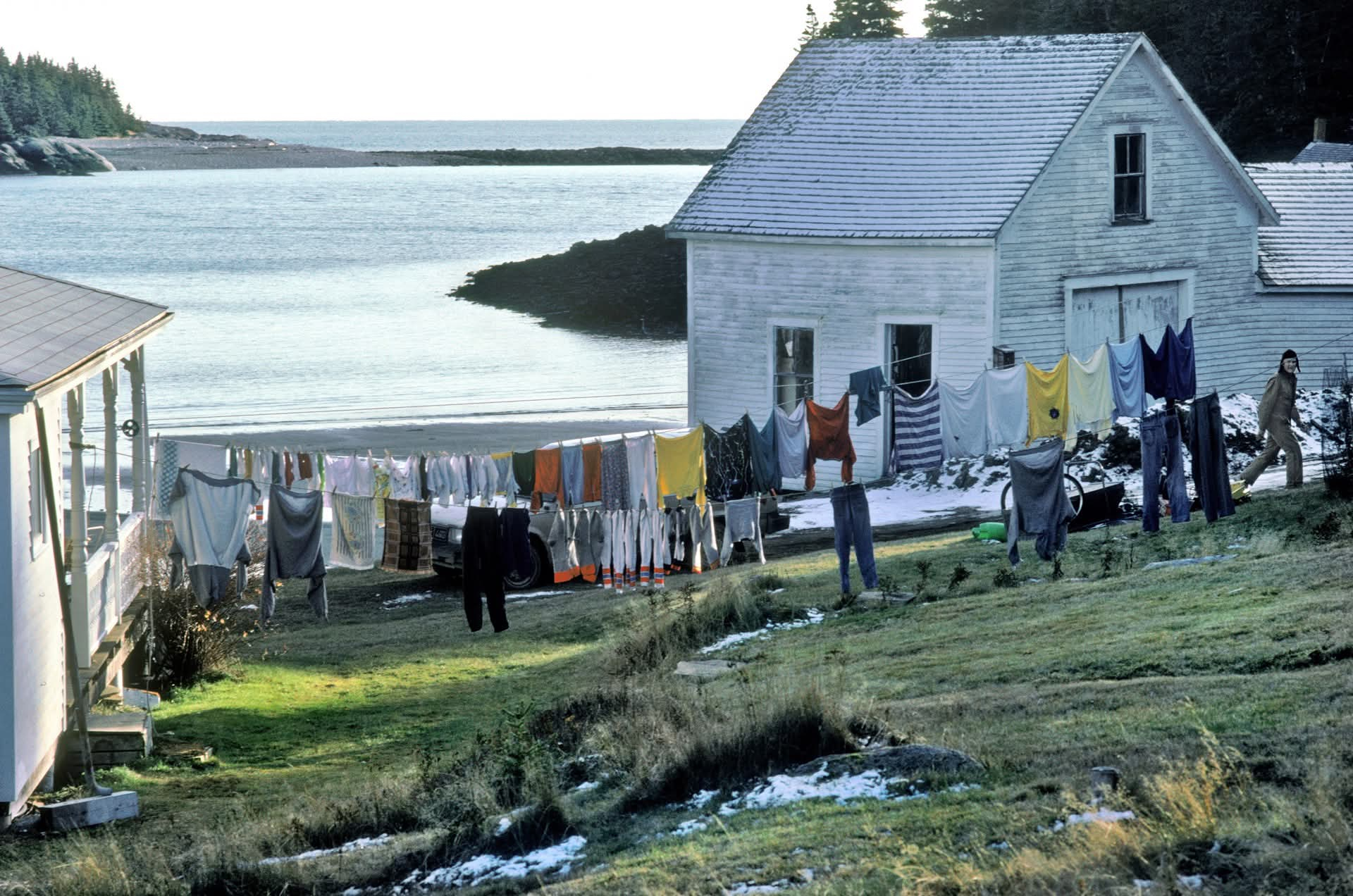 _____________________________________SIGNATURE________________________________________________
Not today Sir, Probably not tomorrow.............................................. bayfront arena st. pete '94
you're finally here and I'm a mess................................................... nationwide arena columbus '10
memories like fingerprints are slowly raising.................................... first niagara center buffalo '13
another man ..... moved by sleight of hand...................................... joe louis arena detroit '140 -
March 30, 2026 (Monday)
Showing reporters on Air Force One a series of posterboard images of his new ballroom last night, Trump told them: “I thought I'd do this now because it's easier. I'm so busy that I don't have time to do this. But, ah, I'm fighting wars and other things. But this is very important ’cause this is going to be with us for a long time and it’s going to be, I think it’ll be the greatest ballroom anywhere in the world.”
At 7:26 this morning, about two hours before the stock market opened, Trump’s social media account posted: “The United States of America is in serious discussions with A NEW, AND MORE REASONABLE, REGIME to end our Military Operations in Iran. Great progress has been made but, if for any reason a deal is not shortly reached, which it probably will be, and if the Hormuz Strait is not immediately ‘Open for Business,’ we will conclude our lovely ‘stay’ in Iran by blowing up and completely obliterating all of their Electric Generating Plants, Oil Wells and Kharg Island (and possibly all desalination plants!), which we have purposefully not yet ‘touched.’ This will be in retribution for our many soldiers, and others, that Iran has butchered and killed over the old Regime’s 47 year ‘Reign of Terror.’ Thank you for your attention to this matter. President DONALD J. TRUMP”
When he decided to go to war with Iran, Trump apparently fantasized that the operation would look like his strike on Venezuela, in which a fast attack enabled U.S. forces to grab Venezuelan president Nicolás Maduro and his wife Celia Flores, leaving behind Vice President Delcy Rodríguez, who appeared willing to work with the Trump administration, in power. The initial strikes of Israel and the U.S. on Iran did indeed kill that regime’s leadership, but officials simply replaced that leadership from within the regime, making Trump’s claim of regime change as imaginary as his claim that the U.S. and Iran have been at war for 47 years.
More shocking in this statement, though, is that Trump appears to be trying to force his will on the Iranians by threatening to commit war crimes. International law recognizes attacks on civilian infrastructure—like those Russian president Vladimir Putin has been carrying out on Ukraine for years—as war crimes. The Geneva Convention specifically prohibits attacks on drinking water, so Trump’s threat to attack the desalination plants that make seawater drinkable is, as Shashank Joshi of The Economist notes, not only stupid because Iran could do the same to other Gulf states, but “also, quite obviously,...very illegal.”
Joshi notes that “[Arizona Democratic senator] Mark Kelly et al were right to warn of illegal orders,” and Charles A. Ray of The Steady State explains that not just Trump but anyone carrying out these orders would be implicated in potential criminality. Trump’s threat comes the day after Christiaan Triebert and John Ismay of the New York Times reported that on the first day of attacks, U.S. forces hit not just the girls’ school we knew about, but also, in a different city, a sports hall used by civilians and a nearby elementary school, killing at least 21 people.
Trump apparently had no plan B for what to do if the initial plan to strike Iran and knock out its leaders failed, and is now flailing. His repeated assurances that talks with Iran are making “great progress” contrast with Iran’s insistence it is not engaged in talks with the United States. Trump entered the war with vague promises of “regime change” and promises to guarantee Iran never developed a nuclear weapon but now is reduced to hoping for Iran to reopen the Strait of Hormuz, putting the U.S. in the odd position of fighting a war to achieve the conditions that existed before it started the war.
On Sunday, Trump told the Financial Times that “my favorite thing is to take the oil in Iran” as the U.S. did when it took control of Venezuelan oil fields. This sounds like bluster, but he is also massing U.S. troops in the region.
Meanwhile, the price of oil rose to $116 a barrel after strikes against Israel by the Iran-backed Houthis in Yemen. The Houthis have the potential to disrupt yet another key strait, the Bab el-Mandeb, through which tankers carry about 10% of the world’s oil out of the Red Sea to the Gulf of Aden and into the Arabian Sea, from where it can go into the Indian Ocean and to the rest of the world.
In the 1980s, a faction of the Republican Party that was determined to cut taxes and regulations and to get rid of programs that benefiting racial minorities and women went to war against the federal government. Those so-called Movement Conservatives—“movement” because they were a political movement, and “conservatives” because they wanted to take the U.S. back to a time before the New Deal—became increasingly radical over time. Some, like activist Grover Norquist, wanted to take the government back even further, to the time of the robber barons in the 1890s, before “the socialists took over” with the Progressive Era and its income taxes and regulation.
But Americans liked the programs that regulated business, provided a basic social safety net, promoted infrastructure, protected equality before the law, and provided international security, so Movement Conservatives focused on taking power away from Congress, where the people’s voices could be heard, and centering power in the president.
Now we are seeing what that sort of a government, devoid of experts and beholden to the whims of a single man, looks like. After a year in power, Trump’s administration has embroiled the U.S. in a war of choice that has created an extraordinary global energy crisis, inflation is rising, job growth is down, and Republicans in Congress have abdicated their authority to oversee the war or other government agencies, or even to fix a problem of their own making in a partial government shutdown. Instead, they are seemingly content to let Trump do whatever he wishes.
Trump’s imperial presidency has demonstrated the country’s need for the allies he has disdained, as he has been forced to beg for their help. They have generally refused to get involved in a war Trump started without consulting them; today Spain’s defense minister said Spain has closed its airspace to U.S. planes involved in operations against Iran.
Trump appears to be turning not to the gutted State Department, but to his usual cadre of billionaires to help him figure out a way forward. Edward Wong, Theodore Schliefer, Tyler Pager, and Ryan Mac of the New York Times reported that when Trump talked to Prime Minister Narendra Modi of India last Tuesday, billionaire Elon Musk took part in the call, although the readouts from both the U.S. and the Indian government did not mention his participation.
Now, with Congress out of session until April 13, Trump is putting the people and matériel in place to escalate the war. And yet, as Josh Marshall of Talking Points Memo notes, the new goal of freeing traffic in the Strait of Hormuz leaves the Iranians rather than the U.S. in control of the terms of declaring victory. An Associated Press–National Opinion Research Center (AP-NORC) poll from March 25 shows that 59% of Americans think the U.S. has gone too far in Iran, with only 13% supporting escalation. Sixty-two percent oppose sending ground troops into Iran, while only 12% favor the idea.
Even so, as David Kurtz wrote today in Talking Points Memo, “There’s no telling what President Trump will resort to doing to save face, create the mirage of victory, and extricate himself from the box canyon into which he so triumphantly galloped.”
What we do know, though, is that Trump is extraordinarily unlikely ever to do anything that will conflict with the wishes of Russia’s president Vladimir Putin. Trump has blockaded Cuba, strangling its energy sector by blocking off all oil tankers from the island. Although he has stopped Venezuelan and Mexican tankers, today he permitted a Russian-flagged tanker to get through the blockade to sell oil that will help fund Russia’s war against Ukraine.
Asked why he permitted that tanker through, Trump answered: “He loses one boatload of oil, that’s all it is. If he wants to do that, and if other countries want to do it, doesn’t bother me much.” World affairs journalist Frida Ghitis commented: “When Mexico tried to send oil to Cuba, Trump immediately threatened to impose crushing tariffs on it, or on any country that broke his blockade of the island. Now Russia is sending Cuba oil and Trump says it’s fine, no problem. The mystery continues.”
We can also be sure that Trump will find time to keep attacking those he perceives to be his enemies. As J.D. Wolf of Meidas News reported today, Trump has posted about continuing to try to prosecute New York attorney general Letitia James fourteen times in the past five days. James successfully prosecuted Trump, some of his children, and the Trump Organization for fraud. Trump has tried unsuccessfully and repeatedly to charge her with mortgage fraud or insurance fraud.
Peter Sullivan of Axios reported today that to pay for the war and find more money for Immigration and Customs Enforcement (ICE), Republicans are considering making cuts to federal health care spending. House majority leader Steve Scalise (R-LA) told Sullivan that they were looking at areas of “waste and fraud and abuse.”
As the administration flails, insiders are leaking about some of the administration’s most powerful individuals. Two senior sources from the Department of Homeland Security leaked stories about White House deputy chief of staff Stephen Miller to the Daily Mail, a tabloid out of the United Kingdom. They claimed Miller demanded agents in Minneapolis be sent to areas where DHS knew there would be a lot of protesters because he wanted to “force confrontations” between agents and protesters that would enable the administration to “win the ‘PR battle.’” They echoed others in suggesting that Miller, not the president, was in charge of immigration policy.
Yesterday Michelle Boorstein of the Washington Post reported that former high-ranking military officials, experts on religion and law, and veterans groups, as well as current Pentagon staff and officers, have expressed deep concern over Defense Secretary Pete Hegseth’s extremist evangelical worship services and his casting of the U.S. military as a force for Christian holy war. Last Wednesday he prayed for U.S. troops to assert “overwhelming violence of action against those who deserve no mercy,” saying: “We ask these things with bold confidence in the mighty and powerful name of Jesus Christ.”
G. Elliott Morris of Strength in Numbers and Fifty Plus One reported today that Trump has hit a new approval low among all American adults, with 58.1% disapproving of his job in office and just 37.6% approving, an overall difference of -21 . A University of Massachusetts Amherst poll has Trump’s job approval rating at 33%.
Tonight Trump’s social media account posted an AI-generated video of a future President Donald J. Trump Presidential Library. To triumphal music, the video features a gleaming skyscraper containing what appears to be the airplane the president pressured Qatar into giving him, along with what seems to be a replica of the Oval Office…and a model of his anticipated ballroom._____________________________________SIGNATURE________________________________________________
Not today Sir, Probably not tomorrow.............................................. bayfront arena st. pete '94
you're finally here and I'm a mess................................................... nationwide arena columbus '10
memories like fingerprints are slowly raising.................................... first niagara center buffalo '13
another man ..... moved by sleight of hand...................................... joe louis arena detroit '140


Categories
- All Categories
- 149.4K Pearl Jam's Music and Activism
- 110.5K The Porch
- 295 Vitalogy
- 35.1K Given To Fly (live)
- 3.5K Words and Music...Communication
- 39.6K Flea Market
- 39.6K Lost Dogs
- 58.8K Not Pearl Jam's Music
- 10.6K Musicians and Gearheads
- 29.1K Other Music
- 17.8K Poetry, Prose, Music & Art
- 1.1K The Art Wall
- 56.9K Non-Pearl Jam Discussion
- 22.2K A Moving Train
- 31.7K All Encompassing Trip
- 2.9K Technical Stuff and Help